
Gheymeh Polo: A delicious Iranian dish with meat and rice
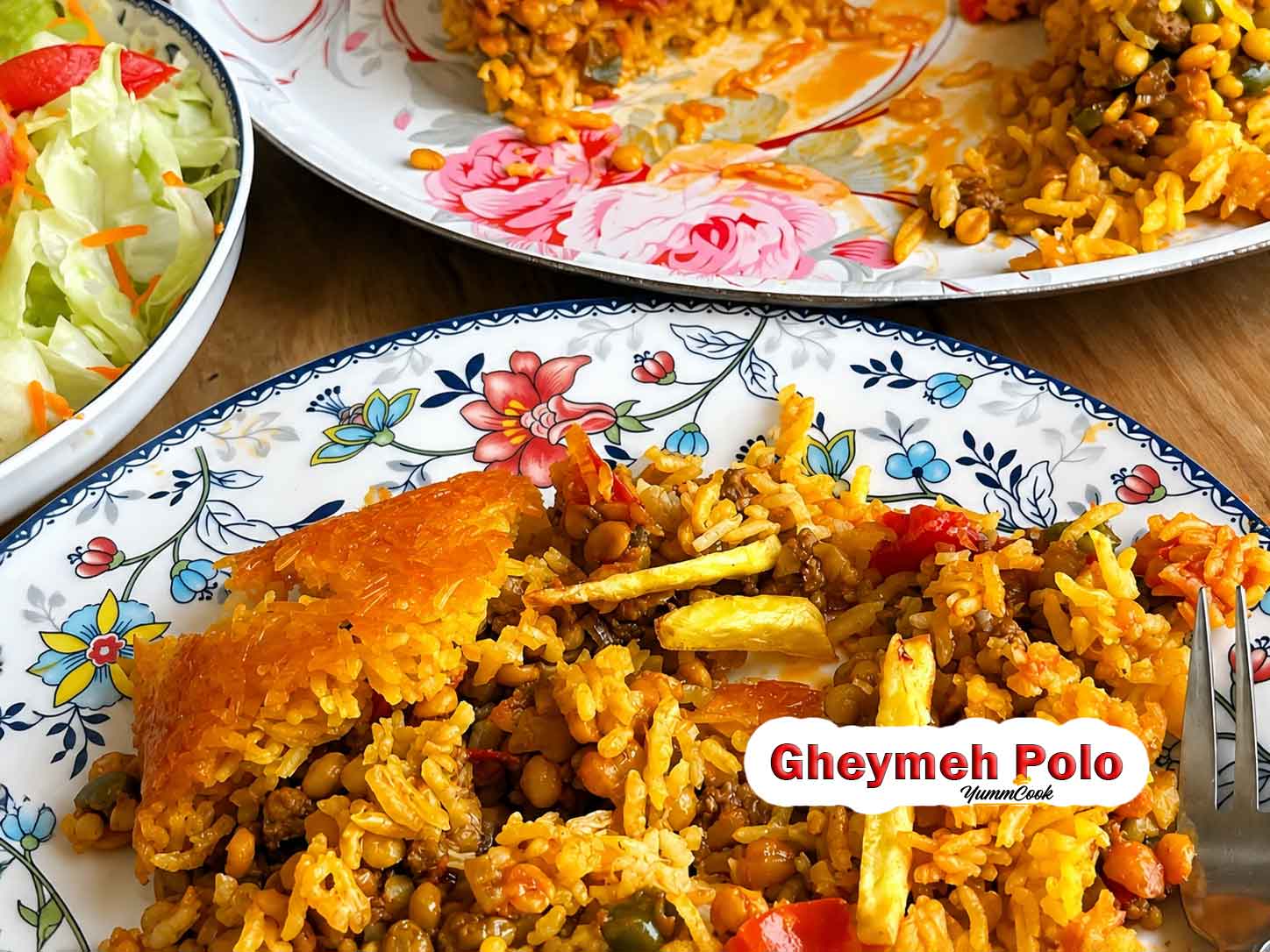
There are Persian dishes that immediately fill the kitchen with an unmistakable aroma, and Gheymeh Polo is one of them. As the onions slowly soften, the turmeric becomes fragrant, the tomato paste deepens in color, and the dried Persian lime starts releasing its citrusy aroma, you get a pretty good idea of what is coming.
Gheymeh Polo is a traditional Persian rice dish made with fluffy basmati rice, tender beef or lamb, yellow split peas, tomato paste, dried Persian lime, and saffron. Unlike a simple rice-and-stew combination, the gheymeh mixture is layered directly with partially cooked rice and then steamed together.
Whether you are already familiar with Persian cuisine or this is your first attempt at Iranian cooking, Gheymeh Polo is a recipe worth learning. It takes some patience, but the process is much easier once you understand what each stage is trying to accomplish.
What Is Gheymeh Polo?
Gheymeh Polo, also written as Gheimeh Polo or Gheymeh Polow, is a classic Persian rice dish made by combining seasoned meat and yellow split peas with steamed basmati rice. The gheymeh mixture typically includes onion, turmeric, tomato paste, dried Persian lime, and sometimes a small amount of cinnamon or other warm spices. The name itself tells you something about the dish. Gheymeh refers to the savory meat and split pea mixture, while polo or polow describes the Persian style of cooking rice.
Gheymeh Polo is closely related to Khoresh Gheymeh, another beloved Persian dish. The two share many of the same ingredients, but they are finished differently. Khoresh Gheymeh is a stew that is served alongside Persian rice, while Gheymeh Polo brings the two elements together by layering the thick gheymeh mixture between partially cooked rice before the final steaming stage.
Why You’ll Love This Persian Gheymeh Polo
What makes this dish so satisfying is the balance of flavors rather than any single ingredient. The meat gives the dish richness, while yellow split peas add a mild earthy flavor and a soft texture. Tomato paste provides depth, dried Persian lime brings a gentle sourness, and saffron gives the rice a floral aroma that becomes especially noticeable when the lid comes off the pot.
What Does Gheymeh Polo Taste Like?
The flavor is savory, aromatic, and gently tangy. It is not usually a spicy dish, so the emphasis is on fragrance and balance rather than heat. The tomato and onion create a rich base for the meat, while dried Persian lime adds a distinctive citrus note that is difficult to replicate with ordinary lemon juice.
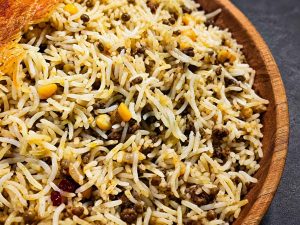
Saffron plays a different role. It does not need to dominate the dish; instead, it perfumes the rice and adds a warm golden color. When properly bloomed, good saffron has a floral, slightly honey-like aroma that works beautifully with the earthy split peas and rich meat. The finished dish should never feel heavy or wet. One of the pleasures of good Persian rice is being able to see individual grains on your plate.
Ingredients for Gheymeh Polo
The ingredient list for Gheymeh Polo is fairly simple, which is one reason the cooking technique matters so much.
| Ingredient | Amount |
| Beef or lamb, cut into small cubes | 500 g |
| Yellow split peas | ¾ cup |
| Large onion, finely chopped | 1 |
| Tomato paste | 2 tablespoons |
| Turmeric | 1 teaspoon |
| Black pepper | ½ teaspoon |
| Dried Persian limes | 2-3 |
| Ground cinnamon | ¼ teaspoon (optional) |
| Salt | To taste |
| Neutral oil | 2-3 tablespoons |
| Water or light stock | 1½-2 cups |
| Brewed saffron | As needed |
How to Make Gheymeh Polo
Step 1: Partially Cook the Split Peas
Rinse the yellow split peas under cool water and place them in a small saucepan. Cover them with fresh water and bring them to a gentle simmer. Cook them until they are partially tender, then drain them. You are not looking for fully cooked split peas at this point.
They should still have enough structure to survive the rest of the cooking process. This is one of those little steps that can determine whether the final dish has beautiful individual ingredients or a softer, more blended texture. Give the split peas enough time to soften, but stop before they begin falling apart.
Step 2: Build the Flavor Base
Heat the oil in a heavy-bottomed saucepan over medium heat and add the chopped onion. Let it cook slowly until soft and lightly golden. This may take a little longer than you expect, but gently cooked onion provides a much sweeter and deeper foundation than onion that has simply been browned in a hurry.
Add turmeric and black pepper and stir for a few seconds until fragrant. Add the cubed beef or lamb and cook until the outside of the meat has browned lightly. At this stage, the meat does not need to be fully cooked. You are mainly developing flavor and giving the surface some color before the slow simmer begins.
Step 3: Cook the Tomato Paste
Add the tomato paste and stir it into the meat and onion mixture. Let it cook for two or three minutes, stirring occasionally. Cooking tomato paste this way gives it a deeper, more concentrated flavor and takes away that raw tomato taste.
You should notice the color becoming slightly darker as it cooks. Add the partially cooked yellow split peas and the pierced dried Persian limes. Pour in enough water or stock to allow the meat to cook gently.
Step 4: Simmer Until Tender
Bring the mixture to a gentle simmer, cover the pot, and cook until the meat is tender and the split peas are fully cooked. The exact time depends on the meat you choose and the size of your pieces, so use tenderness as your guide.
The meat should be easy to bite through, while the split peas should be soft but still visible. As the gheymeh cooks, keep an eye on the liquid. This is especially important for Gheymeh Polo because you do not want a watery stew going into the rice.
Near the end of cooking, remove the lid if necessary and allow the excess liquid to evaporate. The finished gheymeh should be thick, rich, and spoonable. If it looks like a soup, it needs more reduction.
Preparing the Saffron
While the gheymeh simmers, prepare your saffron. Gently grind the saffron threads with a mortar and pestle, then place them in a small glass and pour over a few tablespoons of hot water. Let the saffron sit for at least 10 minutes. You will notice the water gradually turning a deep golden color while the fragrance becomes much stronger. This is a small detail, but it is worth doing properly. Bloomed saffron distributes its flavor and color much more effectively than simply sprinkling dry threads over the rice.
Preparing Persian Basmati Rice
Step 5: Rinse and Soak
Place the basmati rice in a large bowl and rinse it several times. Move the grains gently with your fingers and drain the water until it becomes relatively clear. Soak the rice in salted water for around 30 minutes to 2 hours. This gives the grains time to absorb some water before cooking and helps them become long and fluffy.
If you are using a particular brand of basmati regularly, pay attention to how it behaves. Some varieties need more soaking than others. After a few attempts, you will naturally learn the timing that works best in your kitchen.
Step 6: Parboil the Rice
Bring a large pot of water to a boil and season it generously with salt. Drain the soaking water and add the rice. Boil the rice until the outside of each grain is tender, but the center still has a slight bite. Depending on the rice, this generally takes around 5-8 minutes.
Do not wait until the rice tastes completely cooked. That is too late. Drain the rice while the center is still slightly firm because it will finish cooking later through steam. This is one of the fundamental techniques behind fluffy Persian rice.
Building the Gheymeh Polo
Step 7: Prepare the Tahdig
Choose a heavy-bottomed pot with a well-fitting lid and add several tablespoons of oil to the bottom. For a classic rice tahdig, add a thin layer of parboiled rice directly over the oil. You can also use thin potato slices or flatbread if you prefer a different kind of crispy base.
The tahdig is going to spend a long time in direct contact with the bottom of the pot, so make sure the oil covers the surface evenly. You want enough heat to create a crisp crust, but not so much that the bottom burns before the rice finishes steaming.
Step 8: Layer the Rice and Gheymeh
Add a layer of rice, followed by a layer of the thick gheymeh mixture. Continue alternating until everything has been added to the pot, finishing with rice on top. Do not press the layers down. Keep them loose so that steam can circulate. Use the handle of a wooden spoon to make several holes through the rice.
These openings allow steam to move upward and help the entire pot cook evenly. Finally, drizzle the bloomed saffron over the top. You do not need to make every grain yellow. Leaving some of the rice white while tinting other sections golden creates the beautiful contrast commonly seen in Persian rice dishes.
Step 9: Steam the Rice
Wrap the lid with a clean kitchen towel and place it tightly over the pot. Heat the pot over medium-high heat for several minutes until you can see steam beginning to build, then lower the heat.
Allow the Gheymeh Polow to steam gently for about 40-50 minutes. This is the part where patience really matters. It can be tempting to lift the lid after 20 minutes just to see what is happening, but every time you do, you release the steam that is cooking the rice. Let the pot stay closed and give the rice enough time to finish. When the cooking is complete, turn off the heat and allow the pot to rest for 5-10 minutes before serving.
Gheymeh Polo Recipe
Ingredients
Method
- Cook the split peas: Rinse the yellow split peas and simmer them in water until partially tender. Drain and set aside.
- Cook the onion and meat: Heat oil in a heavy-bottomed pot. Add the onion and cook until soft and lightly golden. Add turmeric and black pepper, then add the beef or lamb and brown lightly.
- Add tomato paste: Stir in the tomato paste and cook for 2–3 minutes until it darkens slightly and becomes fragrant.
- Make the gheymeh: Add the partially cooked split peas and pierced dried Persian limes. Pour in the water or stock and bring to a gentle simmer.
- Simmer: Cover and cook until the meat is tender and the split peas are fully cooked. Reduce any excess liquid so the gheymeh becomes thick and spoonable.
- Bloom the saffron: Grind the saffron threads and combine them with a few tablespoons of hot water. Let it bloom for at least 10 minutes.
- Prepare the rice: Rinse the basmati rice several times and soak it in salted water for 30 minutes to 2 hours. Drain, then parboil in generously salted boiling water for about 5-8 minutes. The grains should be tender outside but still firm in the center.
- Layer the rice and gheymeh: Add oil to the bottom of a heavy pot and create a thin layer of rice for the tahdig. Add alternating layers of rice and gheymeh, finishing with rice. Make a few holes in the rice with the handle of a wooden spoon.
- Steam: Drizzle the bloomed saffron over the rice. Wrap the lid with a clean kitchen towel, cover the pot, and steam over medium-high heat for several minutes. Reduce to low heat and cook for 40-50 minutes.
- Rest and serve: Turn off the heat and let the Gheymeh Polo rest for 5-10 minutes. Gently fluff the rice, transfer it to a serving platter, and serve with the crispy tahdig.
How to Serve Gheymeh Polo
Gently fluff the rice with a large spoon or fork and transfer it to a wide serving platter. Try not to mash the layers together. Part of the charm of Gheymeh Polo is being able to see the fluffy rice, golden split peas, and pieces of meat throughout the dish. For a beautiful finish, spoon some of the saffron-tinted rice over the top.
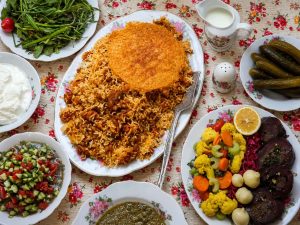
Carefully remove the tahdig from the bottom of the pot and serve it alongside the rice. A fresh side is almost always welcome. Shirazi salad, made with cucumber, tomato, onion, and herbs, adds brightness and acidity.
Plain yogurt or Mast-o-Khiar brings a cool, creamy contrast, while Persian pickles add another sharp note. If you are serving the dish to guests, put the tahdig on a separate plate rather than hiding it under the rice. It rarely lasts long once people see it.
My Best Tips for Perfect Gheymeh Polo
The biggest secret is to think about moisture at every stage. The split peas need enough water to cook, but they should not be drowned. The gheymeh needs enough liquid for tender meat, but it must be reduced before being layered with the rice.
The rice needs water during parboiling, but it should be drained while still firm. Good Persian rice is also about resisting the urge to interfere. Once the rice has been layered and the lid is on, let the steam work. Constant stirring, lifting the lid, or checking the bottom will only make it harder to achieve the texture you want. Finally, do not underestimate the importance of saffron and dried lime. You do not need enormous quantities. What matters is using them carefully so that the saffron provides fragrance and the dried lime provides brightness without taking over the dish.
Common Mistakes to Avoid
Using Too Much Liquid
This is probably the most common problem with Gheymeh Polo. If the gheymeh is watery when you layer it with the rice, the excess moisture can make the grains soft and sticky. Reduce the gheymeh until it is thick before assembling the dish.
Overcooking the Rice
Remember that the rice is cooked twice. First it is parboiled, and then it finishes cooking through steam. If you completely cook it during the first stage, it will almost certainly become too soft later.
Letting the Split Peas Fall Apart
Cook the yellow split peas only until partially tender before adding them to the gheymeh. They should be able to withstand the remaining cooking without turning into a paste.
Burning the Tahdig
High heat is not the secret to good tahdig. You need steady heat and patience. Once the pot has generated enough steam, lower the heat and allow the bottom to slowly become crisp and golden.
Adding Too Much Dried Lime
Persian dried lime has a powerful flavor. Start conservatively, especially if you are unfamiliar with it. You can always add more acidity in
Gheymeh Polo Variations
There is no single version of Gheymeh Polo that appears on every Persian table. Family recipes naturally differ, and cooks adjust the dish according to their preferred meat, seasoning, and level of acidity.
Beef Gheymeh Polo is an excellent everyday version and is easy to prepare with beef chuck.
Lamb Gheymeh Polo has a richer flavor and pairs particularly well with saffron and dried lime.
If you prefer poultry, chicken can also be used, although the cooking time needs to be reduced because chicken becomes tender much faster. For a vegetarian version, omit the meat and add mushrooms, eggplant, or a plant-based protein. You can also increase the amount of split peas slightly to make the dish more substantial. The saffron rice, tomato, dried lime, and yellow split peas will still provide plenty of flavor.
Gheymeh Polo vs. Khoresh Gheymeh
These two dishes are easy to confuse because their flavor base is so similar. Both traditionally use meat, yellow split peas, tomato, turmeric, and dried Persian lime, but the cooking and serving methods are different. With Khoresh Gheymeh, the mixture remains a stew and is served next to Persian rice. Crispy fried potatoes are also a common accompaniment.
With Gheymeh Polo, the thick gheymeh is layered with partially cooked rice and steamed together. This allows the rice to absorb some of the flavor as it finishes cooking. If you love Khoresh Gheymeh, there is a very good chance you will enjoy Gheymeh Polo too. The ingredients are familiar, but the rice-centered preparation creates a completely different dish.
Can You Freeze Gheymeh Polo?
Yes, Gheymeh Polo freezes quite well, especially when stored in individual portions. Let the food cool completely before placing it in freezer-safe containers, and try to remove as much excess air as possible.
For the best result, thaw the rice overnight in the refrigerator and reheat it gently with a small splash of water. The tahdig will not usually remain as crisp after freezing. If crispy rice is important to you, consider making a fresh small batch of tahdig when you reheat the meal.
What to Serve with Gheymeh Polo
Because Gheymeh Polo is flavorful and filling, simple sides work better than dishes that compete with it. Shirazi salad is one of the best choices because its fresh vegetables and acidity brighten the rich rice and meat. A bowl of plain yogurt is another easy addition.
If you want more flavor, try Mast-o-Khiar with cucumber and herbs. Persian pickles, fresh mint, basil, parsley, and other herbs can also be placed on the table so everyone can add whatever they like. For a more traditional Persian spread, you can serve the rice with yogurt, salad, torshi, fresh herbs, and a generous plate of tahdig. The combination of warm rice, cool yogurt, crisp vegetables, and crunchy tahdig makes the entire meal feel much more complete.
Frequently Asked Questions
Is Gheymeh Polo the same as Gheymeh?
Not exactly. Gheymeh usually refers to the Persian stew made with meat and yellow split peas, while Gheymeh Polo combines that style of gheymeh with Persian rice and steams the two together.
What rice should I use for Gheymeh Polo?
Long-grain basmati rice is the best choice. Look for rice that produces long, separate grains after cooking rather than a short-grain variety designed to become sticky.
Can I use beef instead of lamb?
Absolutely. Beef chuck works particularly well because slow cooking makes it tender. Lamb shoulder is another excellent option if you prefer a richer flavor.
Can I make Gheymeh Polo vegetarian?
Yes. Mushrooms, eggplant, tofu, or plant-based meat can replace the meat. The key flavors come from the onion, tomato paste, turmeric, yellow split peas, dried lime, and saffron.
Why is my Gheymeh Polo mushy?
The most common causes are overcooked rice and a gheymeh mixture that is too wet. Drain the rice while it still has a firm center and reduce the gheymeh until thick before layering.
How do I make really crispy tahdig?
Use enough oil to coat the bottom of the pot. Give the pot time to heat before reducing the temperature, and avoid opening the lid repeatedly. A heavy-bottomed pot also helps distribute the heat more evenly.
Can I make Gheymeh Polo without dried lime?
You can, but the flavor will be different. Fresh lemon can provide acidity, but it will not replicate the earthy citrus character of Persian dried lime. If possible, look for limoo amani at a Persian or Middle Eastern grocery store.
Final Thoughts
Gheymeh Polo is one of those recipes where the ingredients may look modest on paper, but the finished dish feels anything but ordinary. A handful of pantry staples rice, split peas, onion, tomato paste, and spices become something much more complex once they are cooked slowly and given time to develop.
The real beauty is in the balance. The rice should be light enough to keep you reaching for another spoonful, the gheymeh should be rich without being heavy, the dried lime should add just enough tang, and the saffron should linger gently in the background.
If you enjoy the rich flavors and aroma of Gheymeh Polo, you may also want to try other delicious Persian rice dishes such as Shirin Polo, Baghali Polo, Chickpea Rice, and Kabuli Rice. Each one offers a unique combination of fragrant rice, spices, meat, legumes, or dried fruits, making them wonderful choices for exploring the variety of traditional Persian and Afghan rice dishes.
