
Morgh-e Torsh Recipe: Persian Chicken Stew
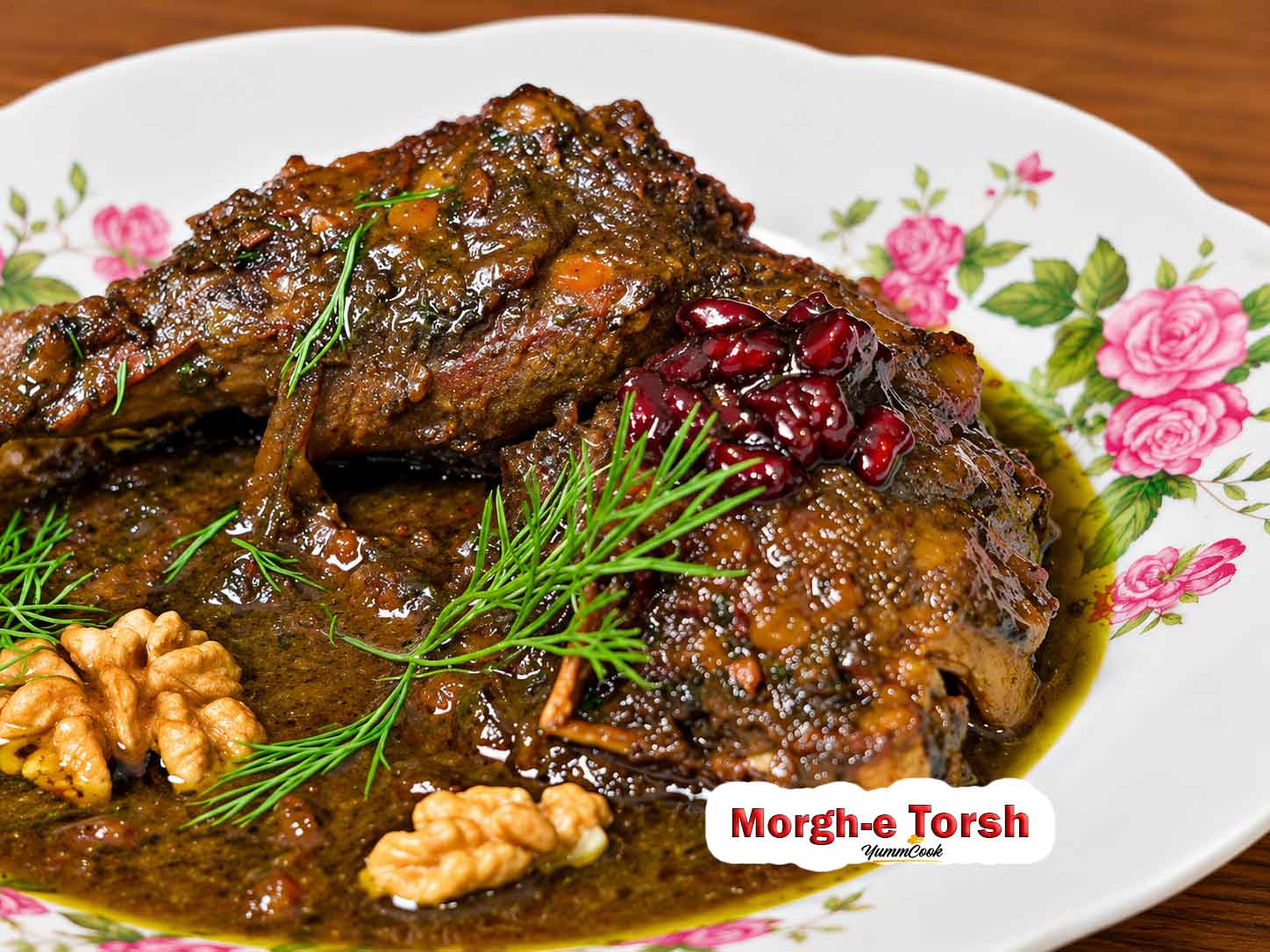
Morgh-e Torsh is a beloved Persian chicken stew known for its tangy flavor, fragrant herbs, and comforting homemade taste. Originating in the northern Iranian province of Gilan, this traditional dish brings together chicken, fresh herbs, garlic, eggs, and sour ingredients to create a rich and memorable meal. Every spoonful offers a delicious balance of earthy herbs and refreshing acidity.
What makes this dish special is how easily you can adjust its flavor to suit your preferences. Some people enjoy a distinctly sour stew, while others prefer a milder, sweet-and-sour taste. In this guide, you will learn how to make a delicious Morgh-e Torsh recipe at home, with practical tips to help you achieve tender chicken and a beautifully balanced sauce.
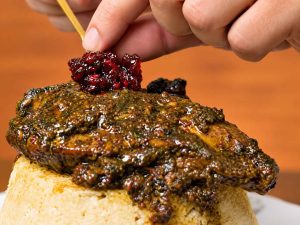
A Taste of Northern Iran: The Story Behind Morgh-e Torsh
Morgh-e Torsh has its roots in Gilan, a lush province along the southern coast of the Caspian Sea. This region is famous for its rice fields, fresh herbs, garlic, and distinctive sour flavors. Its traditional cuisine often combines locally available ingredients to create dishes that are both rustic and deeply flavorful.
Morgh-e Torsh reflects this culinary heritage through its generous use of herbs and its signature tangy sauce. Recipes vary from one household to another, with some cooks adding walnuts, ground nuts, or local souring ingredients. Although versions of the dish are also enjoyed in neighboring parts of northern Iran, it remains closely associated with Gilani home cooking.
What Makes a Great Morgh-e Torsh Recipe?
The secret to a delicious Morgh-e Torsh is not simply adding sour ingredients. The real magic comes from balancing the flavor of the chicken with the freshness of the herbs and the acidity of the sauce. Fresh parsley, cilantro, mint, and fenugreek can create a wonderfully aromatic base. Garlic adds depth, while pomegranate paste or another traditional souring ingredient gives the stew its characteristic taste. Depending on the recipe, eggs may also be incorporated near the end of cooking to add richness and body. Patience is just as important as the ingredients. Allowing the chicken to simmer gently gives the flavors time to develop and helps the sauce become more cohesive.

Ingredients for Homemade Morgh-e Torsh
The following ingredients make approximately four servings. The amount of pomegranate paste can be adjusted according to how sour or sweet you prefer your stew.
| Ingredient | Amount |
| Chicken thighs or drumsticks | 4 pieces |
| Fresh parsley, finely chopped | 100 g |
| Fresh cilantro, finely chopped | 100 g |
| Fresh mint, finely chopped | 30 g |
| Fresh fenugreek, finely chopped | 1 tablespoon |
| Onion, finely chopped | 1 large |
| Garlic, minced | 4 cloves |
| Sweet-and-sour pomegranate paste | 2-3 tablespoons |
| Eggs | 2 |
| Turmeric | 1 teaspoon |
| Black pepper | ½ teaspoon |
| Salt | To taste |
| Vegetable oil | 3 tablespoons |
| Water or chicken stock | 2-3 cups |
Note: Fenugreek has a strong flavor, so use it sparingly. If fresh fenugreek is unavailable, a small pinch of dried fenugreek can be used instead. Pomegranate paste varies in sweetness and acidity, so start with a smaller amount and adjust it during cooking.
How to Make Morgh-e Torsh Step by Step
Step 1: Prepare the Chicken
Pat the chicken pieces dry and season them with salt, black pepper, and half of the turmeric. Heat one tablespoon of oil in a large, heavy-bottomed pot over medium heat. Brown the chicken on both sides for a few minutes until the surface develops a light golden color. You do not need to cook it completely at this stage. Transfer the chicken to a plate and set it aside. Browning helps develop a deeper flavor in the finished stew, so avoid rushing this step.
Step 2: Build a Flavorful Onion and Garlic Base
Add another tablespoon of oil to the same pot. Stir in the chopped onion and cook for about five to seven minutes, until it softens and begins to turn golden. Add the minced garlic and the remaining turmeric. Stir for another minute, allowing the garlic to release its aroma without burning. This simple base gives the stew warmth and depth before the herbs are added.
Step 3: Sauté the Fresh Herbs
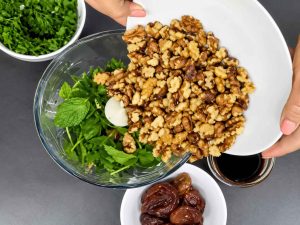
Heat the remaining oil in a separate pan, then add the chopped parsley, cilantro, mint, and fenugreek. Cook over medium-low heat for approximately eight to twelve minutes, stirring regularly. The herbs should become darker and fragrant without turning black or developing a burnt smell. Properly sautéed herbs contribute much of the stew’s distinctive character, so take your time with this stage.
Step 4: Combine the Ingredients
Return the browned chicken to the main pot. Add the sautéed herbs and two cups of water or chicken stock, stirring gently to distribute the ingredients. Bring the mixture to a gentle boil, then reduce the heat to low. Cover the pot partially and let everything simmer for about 35-45 minutes, or until the chicken is tender. Cooking time depends on the size of the chicken pieces. Check the liquid occasionally and add a little more water if the sauce becomes too thick before the chicken is fully cooked.
Step 5: Add the Pomegranate Paste
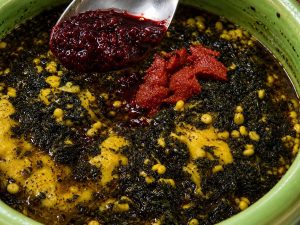
Stir two tablespoons of sweet-and-sour pomegranate paste into the stew. Allow it to simmer for another 10-15 minutes so the fruity acidity can blend with the herbs and chicken. Taste the sauce before adding more paste. If you enjoy a sharper, more traditional sour flavor, you can add another small spoonful. For a gentler, rounder taste, keep the amount moderate. This is the stage where you can make the recipe your own without losing its northern Iranian character.
Step 6: Finish with Eggs
In a small bowl, whisk the eggs until smooth. For a more traditional home-style finish, slowly pour them into the gently simmering stew while stirring lightly, allowing them to cook through and blend into the sauce. Some households prefer to serve the eggs separately or omit them entirely, so this step can be adapted to your taste. If you add eggs, make sure they are fully cooked before serving. Let the stew simmer for a few more minutes, then taste and adjust the salt, pepper, and pomegranate paste as needed.
Morgh-e Torsh Recipe
Ingredients
Method
- Season the chicken: Pat the chicken dry and season it with salt, black pepper, and half the turmeric.
- Brown the chicken: Heat oil in a pot and brown the chicken on both sides. Set aside.
- Cook the onion and garlic: Sauté the chopped onion until golden. Add the garlic and remaining turmeric.
- Sauté the herbs: Cook the parsley, cilantro, mint, and fenugreek in oil for 8-12 minutes until fragrant.
- Simmer the stew: Return the chicken to the pot. Add the herbs and 2 cups of water or chicken stock. Simmer for 35-45 minutes until the chicken is tender.
- Add pomegranate paste: Stir in the pomegranate paste and simmer for another 10-15 minutes. Adjust the amount to your preferred sour or sweet-and-sour flavor.
- Add the eggs: Whisk the eggs and slowly add them to the gently simmering stew while stirring lightly. Cook until the eggs are fully cooked.
- Serve: Adjust the seasoning and serve hot with Persian rice.
My Personal Touch: A Sweet-and-Sour Version
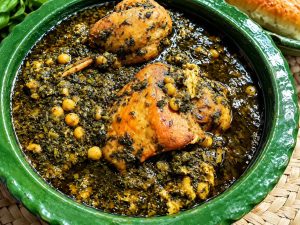
I personally prefer a balanced, sweet-and-sour flavor rather than an intensely sour stew. When I prepare Morgh-e Torsh, I like to use a little sweet-and-sour pomegranate paste to soften the sharpness of the herbs and create a rounder, more comforting sauce. I usually begin with two tablespoons, let the stew simmer, and taste it before deciding whether it needs more. This small adjustment makes a noticeable difference: the pomegranate adds a fruity depth without overpowering the chicken or the fresh herbs. For anyone who enjoys a mild, pleasant tang, this is a lovely way to prepare the dish. The goal is to let the sweet, sour, savory, and herbal notes complement one another rather than compete for attention.
Tips for a Richer and More Flavorful Stew
Choose fresh herbs whenever possible. Fresh parsley and cilantro provide a brighter aroma and a more natural flavor than dried substitutes.
Avoid burning the herbs. Dark, burnt herbs can introduce bitterness. Cook them slowly until fragrant and well reduced.
Adjust the acidity gradually. Pomegranate paste varies considerably between brands and varieties. Add a little at a time, especially if you prefer a balanced sweet-and-sour result.
Give the stew enough time. Gentle simmering helps the chicken become tender while allowing the sauce to develop a fuller flavor.
Keep the sauce moist but not watery. Morgh-e Torsh should have a flavorful, slightly thickened sauce. Add small amounts of water only when necessary.
What to Serve with Morgh-e Torsh
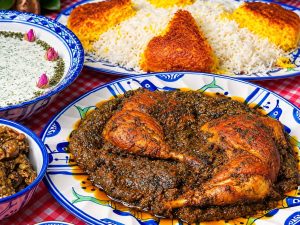
Morgh-e Torsh is traditionally served with Persian rice, especially fluffy steamed basmati rice. The rice absorbs the tangy herb sauce and creates a satisfying contrast with the tender chicken. You can also serve it with fresh herbs, sliced radishes, and pickled vegetables for a more traditional Iranian meal. A simple salad with cucumber and tomato works well, too, because its freshness complements the richness of the stew. For the best experience, serve the dish hot and spoon plenty of sauce over the rice. The combination of aromatic herbs, tender chicken, and sweet-and-sour pomegranate makes every bite feel comforting and distinctive.
Explore More Traditional Gilani Recipes
Northern Iranian cuisine is full of delicious dishes made with fresh herbs, walnuts, and pomegranate. If you enjoy the tangy flavors of Morgh-e Torsh, try Shish Andaz, a flavorful regional dish with a sweet-and-sour taste, or Fesenjan, a rich stew made with walnuts and pomegranate molasses. You can also explore Anar Bij, a traditional Gilani stew with herbs and walnuts, Baghali Ghatogh, a comforting fava bean dish with dill and eggs, and Mala Ghormeh, a delicious local dish featuring eggplant and tomatoes. These recipes offer a wonderful way to discover the diverse flavors of Gilan.
Common Questions About Morgh-e Torsh
Is Morgh-e Torsh originally from Gilan?
Yes. Morgh-e Torsh is strongly associated with Gilan in northern Iran, a region known for its herb-rich cooking and distinctive sour flavors.
What does Morgh-e Torsh taste like?
It has a savory, herbal flavor with a noticeable tanginess. Depending on the pomegranate paste and the cook’s preferences, the final taste can range from distinctly sour to pleasantly sweet and sour.
Can I make Morgh-e Torsh without eggs?
Yes. Eggs are included in some traditional preparations, but you can leave them out if you prefer a lighter sauce or want a simpler version of the recipe.
Can I use chicken breast instead of thighs?
Yes, but chicken breast cooks more quickly and can become dry if simmered for too long. Check it earlier and adjust the cooking time to keep the meat tender.
How can I make Morgh-e Torsh less sour?
Start with a small amount of pomegranate paste and increase it gradually. Choosing a sweet-and-sour variety is another easy way to create a more balanced sauce.
Final Thoughts
Morgh-e Torsh is more than a chicken stew; it is a delicious expression of northern Iran’s culinary traditions. Its combination of fresh herbs, garlic, tender chicken, and tangy pomegranate creates a distinctive flavor that is both comforting and memorable. The beauty of a homemade Morgh-e Torsh recipe lies in its flexibility. You can keep it sharply sour or, as I prefer, use sweet-and-sour pomegranate paste for a gentler balance. Serve it with fragrant Persian rice, take your time with the herbs, and enjoy a traditional dish that brings the flavors of Gilan to your table.
