
Sangak Bread: Easy and Authentic Iranian Recipe
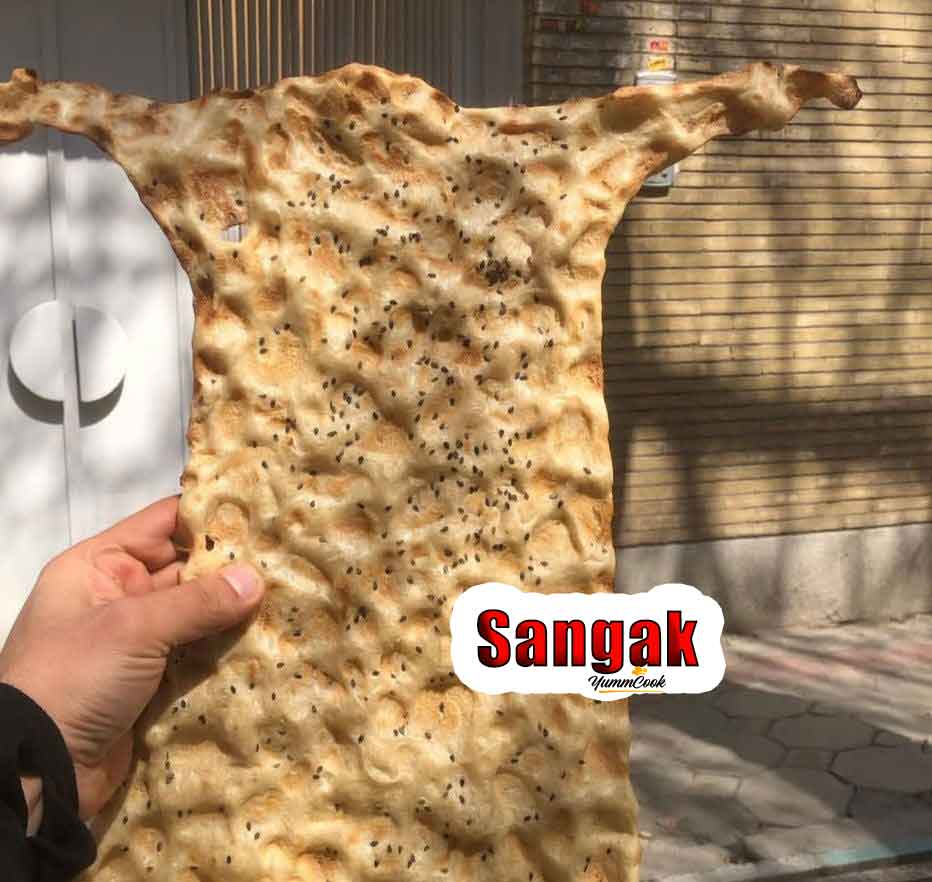
Sangak bread is one of the most authentic, oldest, and most popular Iranian breads that has been an important part of the Iranian table for centuries. This bread, which is baked on hot stones, not only has a unique taste and aroma, but also is considered one of the healthiest choices for daily meals due to its high nutritional value, high fiber, and easy digestion.
Sangak, along with barbari, Taftoon, and Regag, constitute the four main traditional Iranian breads; but we can boldly say that Sangak has a more special place among them, because it both retains the warm and authentic taste of the oven and is much more useful and healthier compared to bulky and industrial breads.
What is Sangak Bread?
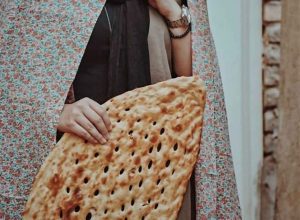
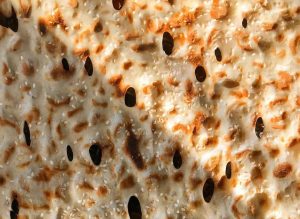
Sangak bread is a traditional Iranian bread made with whole or semi-wheat flour, water, salt, and yeast, and baked on pebbles in an oven. These pebbles give the bread a special texture that makes it crispy, fragrant, and wavy.
Main features of Sangak bread:
- Medium thickness and elastic texture
- High bran (if using whole wheat flour)
- Smoke and oven aroma
- Crispy at the edges and soft in the center
- Easy and natural digestion
- Longer shelf life than lavash or barbari
Sangak bread can be made plain or with sesame, with the sesame type having more nutritional value.
Ingredients for making homemade Sangak bread (4 medium loaves)
Although baking professional Sangak recipe at home is a bit difficult, by following the tips below, you can make bread very close to bakery Iranian bread.
| Whole wheat flour or whole wheat flour | 3 cups |
| Warm water | 1/5 cup |
| Salt | 1 teaspoon |
| Dry yeast | 1 tablespoon |
| Sugar | 1 teaspoon |
| Liquid oil or butter | 1 tablespoon |
| Sesame or black seeds | (optional) |
Note: For better results, use a combination of whole wheat flour and white flour to improve the texture of the bread.
How to make Sangak bread recipe (step by step)
-
Activating the yeast
In a small bowl, mix the yeast with sugar and a little lukewarm water and wait 10 minutes for it to foam. This step is essential for the bread to puff up better.
-
Preparing the main dough
Sieve the flour and pour it into a large bowl, make a well in the middle, and add the yeast, salt, and oil mixture. Gradually add the water and knead the dough well for 10 minutes until it becomes soft and smooth.
-
Resting the dough
Cover the bowl and place in a warm place for 45 to 60 minutes until it doubles in size.
-
Shaping the bread
Divide the dough into 2 to 4 parts, and sprinkle a little flour on a flat surface and roll out the dough into a rectangle or long shape. The appropriate thickness for the stone is about 4 to 6 mm. If you want the bread to resemble a bakery stone, you can make small waves on the bread with your hands.
-
Baking the bread
If you have special pebbles in the oven, place the bread on the stones.
Otherwise:
- Preheat the oven tray.
- Place the bread in the very hot tray.
- Temperature: 250 degrees
- Baking time: 7 to 10 minutes
At the end, you can turn on the grill for a few minutes to crisp the edges.
Sangak Bread (Traditional Iranian Stone-Baked Bread)
Ingredients
Method
- Activate the Yeast
- Mix yeast, sugar, and a little lukewarm water. Let it foam for 10 minutes.
- Prepare the Dough
- Add flour, salt, oil, and yeast mixture. Slowly add warm water and knead for 10 minutes until the dough becomes soft and elastic.
- Rest the Dough
- Cover and let it rise for 45-60 minutes until doubled in size.
- Shape the Bread
- Divide into 2-4 parts. Roll each into a long, thin Sangak shape (4-6 mm thickness). Create slight waves with your fingers.
- Bake
- Preheat oven to 250 C.
- Use preheated tray or baking stones.
- Bake for 7-10 minutes until edges are crispy.
- Optionally turn on broiler for extra crispness.
Golden tips for making a professional stone
- The more bran in the flour, the healthier and more digestible the bread will be.
- Knead the dough a lot to make it elastic.
- Apply a little water or yogurt to the bread before baking so that it does not dry out.
- If you want the bread to be softer, add a little milk to the dough.
- For better taste, baking on a stone or cast-iron tray gives the best results.
Benefits of Sangak Bread for the Body
Sangak bread is one of the healthiest Iranian breads that doctors and nutritionists recommend consuming compared to white bread.
- High fiber: Helps with digestive health
Whole wheat flour is rich in fiber, which improves bowel movements, reduces constipation, and improves digestion.
- Low glycemic index: Better blood sugar control
The bran in Sangak causes blood sugar to rise more slowly, making it more suitable for diabetics.
- Sustained energy: Useful for athletes
Sangak’s complex carbohydrates produce long-lasting energy.
- Rich in B vitamins, improving brain and nervous system function
Vitamins B1, B3, and B6 in wholemeal flour increase concentration, reduce fatigue and improve metabolism.
- Very low fat: Suitable for heart health
The raw materials of Iranian bread are very low in fat and are an excellent option for low-fat diets.
Possible side effects of Sangak bread on the body
- High carbohydrates: Weight gain
People who are inactive should consume Sangak in moderation.
- Not suitable for celiac patients
Due to the presence of gluten, it is not suitable for people sensitive to gluten.
- High bran: Possible bloating for some people
People with sensitive stomachs should control their consumption.
- Effect on blood sugar if consumed excessively
Although the glycemic index of Sangak is lower, overeating still causes an increase in blood sugar.
History of Sangak Bread
The roots of Sangak bread date back to the Safavid era. Historical accounts show that Shah Abbas Safavi ordered the soldiers to make bread that would be both energizing and slow to spoil. The result was a bread made with wholemeal flour and baked on a stone, which we know today as “Sangak”.
In the past, Sangak ovens were very popular in markets and neighborhoods, and people would line up at dawn to get fresh bread. Many Iranians still consider buying hot Sangak bread from a bakery one of the most enjoyable moments of the day.
How to serve Sangak bread?
- With cheese and walnuts
- With dates and butter
- With Halim, Sirabi, or Kale pache
- With various kebabs and stews
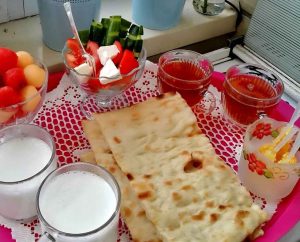
- With vegetables for breakfast or dinner
How to store Sangak bread
- Best method: inside a cotton cloth
- For long-term storage: freeze
- Do not use the refrigerator; the bread will dry and harden.
Summary
Sangak bread is not only one of the most authentic Iranian breads, but also one of the healthiest breads in terms of nutrition. It is made with wholemeal flour, is very high in fiber, is easy to digest, and has a unique flavor because it is baked on a stone. If you are looking for a nutritious, healthy, easily digestible bread that is suitable for all meals, Sangak is the best choice. Baking or buying fresh Iranian bread once is enough to fall in love with its traditional aroma and flavor.