
Shir Berenj (Persian Rice Pudding): Authentic Iranian Rice Pudding Recip
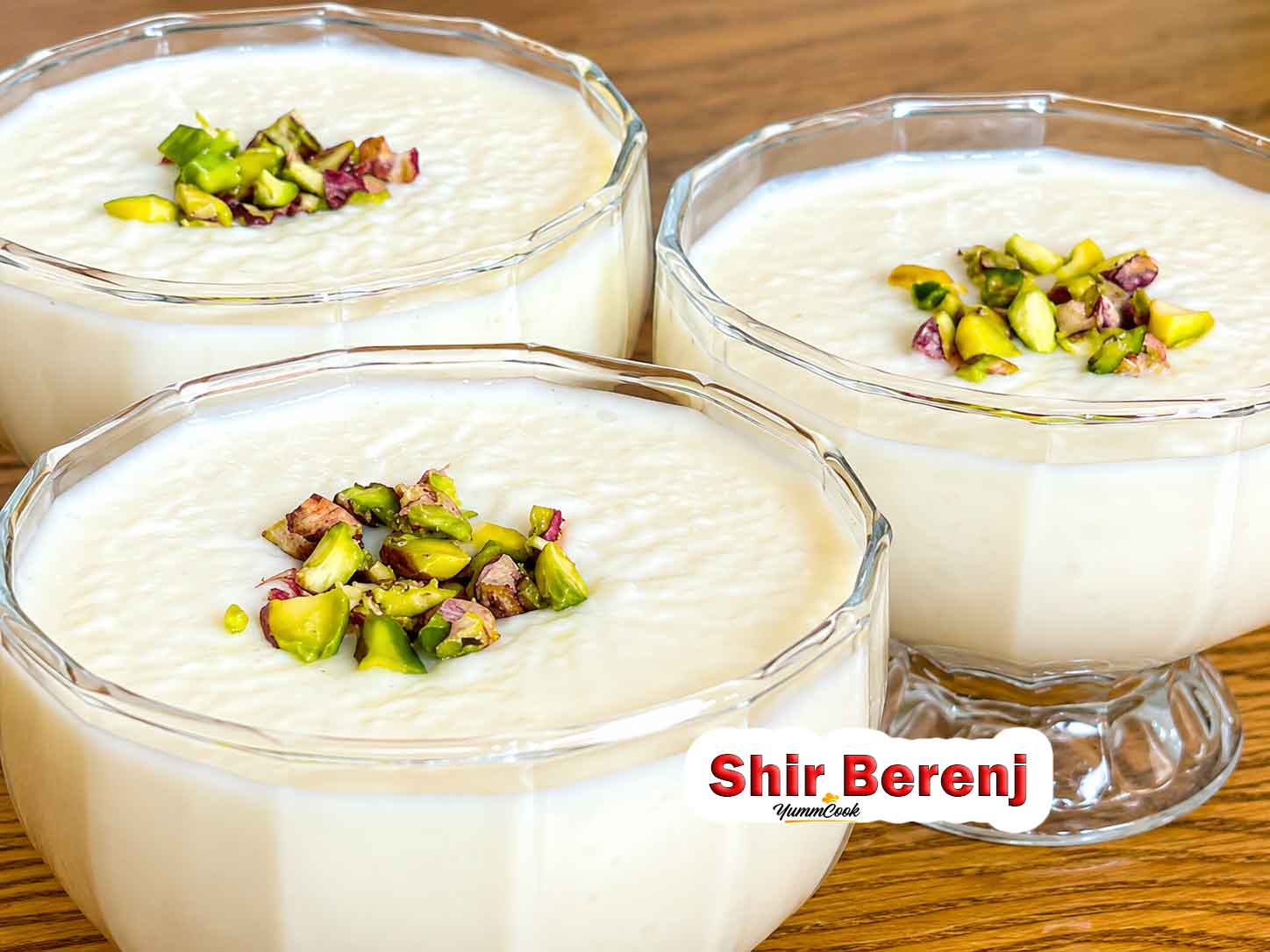
Shir Berenj is a traditional Persian rice pudding made with rice, milk, sugar, and fragrant rose water. Unlike many classic rice pudding recipes, it has a delicate floral aroma and an incredibly creamy texture. Whether served warm on a cold evening or chilled during summer, this traditional dessert has been part of Persian family tables for generations. It is commonly prepared during Ramadan, family gatherings, and celebrations, but it’s just as popular as an everyday homemade treat.
If you’ve never tried Persian rice pudding before, you’re in for something truly comforting. This recipe is easy to make, requires only a handful of pantry ingredients, and rewards you with a silky dessert that’s both satisfying and elegant.
What Is Shir Berenj?
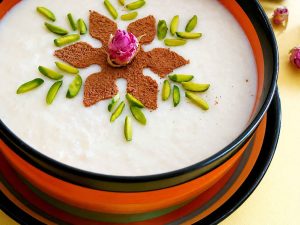
Shir Berenj literally translates to “Milk and rice” in Persian. At its core, it is a slow-cooked rice pudding where short-grain rice gently simmers in milk until it becomes soft and creamy. Unlike many Western-style rice puddings, Shir Berenj is usually flavored with Rose water, giving it a subtle floral fragrance that has become a signature of many Persian desserts.
Some families prefer it lightly sweetened, while others enjoy a richer version topped with cinnamon, pistachios, almonds, or a drizzle of honey. The beauty of Shir Berenj lies in its simplicity. Every ingredient has a purpose, and together they create a dessert that feels luxurious without being complicated.
Why You’ll Love This Persian Rice Pudding
There are plenty of reasons why Shir Berenj has remained a favorite for centuries.
- Made with everyday ingredients
- Naturally gluten-free
- Creamy without heavy cream
- Easy enough for beginner cooks
- Delicious warm or cold
- Perfect for breakfast, dessert, or a light snack
- Customizable with nuts and spices
It’s one of those recipes that proves you don’t need fancy ingredients to create something memorable.
Ingredients
One of the reasons Shir Berenj is so popular is that it requires only a few basic ingredients.
Short-Grain Rice
Persian rice pudding is traditionally made with short-grain rice because it releases more starch while cooking. The starch creates the smooth, creamy consistency that makes this dessert so comforting. If short-grain rice isn’t available, Arborio rice also works well.
Milk
Whole milk creates the richest flavor, although reduced-fat milk can also be used if you prefer a lighter dessert.
Sugar
Granulated sugar adds just enough sweetness without overpowering the delicate aroma of the rose water.
Rose Water
Rose water is the ingredient that transforms ordinary rice pudding into authentic Shir Berenj.
A small amount goes a long way, adding an elegant floral note that complements the creamy milk beautifully.
Cardamom (Optional)
Some Persian families like adding a pinch of ground cardamom for extra warmth and aroma.
Butter (Optional)
A small knob of butter can make the pudding even smoother and richer.
What You’ll Need to Make Shir Beren
| Ingredient | Amount |
| Short-grain rice | 1 cup |
| Water | 2 cups |
| Whole milk | 4 cups |
| Sugar | ½ cup |
| Rose water | 2 tablespoons |
| Ground cardamom | ¼ teaspoon |
| Butter (optional) | 1 tablespoon |
How to Make Shir Berenj
Making Persian rice pudding isn’t difficult, but patience is the secret.
Step 1: Wash the Rice
Rinse the rice several times until the water runs almost clear.
This removes excess starch while keeping enough to help the pudding become creamy.
Step 2: Cook the Rice
Place the rice and water in a large saucepan.
Bring to a boil before reducing the heat to low.
Cook until most of the water has been absorbed and the rice becomes tender.
Step 3: Add the Milk
Slowly pour in the milk while stirring continuously.
Allow the mixture to simmer gently over low heat.
Avoid boiling the milk too quickly, as slow cooking creates the smoothest texture.
Step 4: Sweeten
Add the sugar and continue stirring occasionally.
The pudding will gradually thicken over the next 30-40 minutes.
Step 5: Add Rose Water
Once the rice is completely soft, stir in the rose water and optional cardamom.
Cook for another five minutes.
Step 6: Serve
Remove from the heat and allow the pudding to cool slightly.
Serve warm, at room temperature, or chilled.
Shir Berenj (Persian Rice Pudding)
Ingredients
Method
- Rinse the rice until the water runs clear.
- Combine the rice and water in a saucepan and cook over medium heat until most of the water is absorbed.
- Pour in the milk and reduce the heat to low.
- Simmer gently for 30–40 minutes, stirring occasionally.
- Add the sugar and continue cooking until the pudding thickens.
- Stir in the rose water, cardamom, and butter, if using.
- Cook for another 5 minutes.
- Remove from the heat and let it rest for 10-15 minutes.
- Garnish with pistachios, cinnamon, and dried rose petals before serving.
Tips for Perfect Shir Berenj
Even though this recipe is simple, a few small techniques make a noticeable difference.
Cook Slowly
Low heat allows the rice to absorb the milk evenly and creates a naturally creamy texture.
Stir Frequently
Occasional stirring prevents the milk from sticking to the bottom of the pot.
Don’t Add Rose Water Too Early
Adding it near the end preserves its delicate fragrance.
Adjust the Thickness
Remember that rice pudding becomes thicker as it cools.
If it looks slightly loose while cooking, that’s perfectly normal.
The History of Shir Berenj
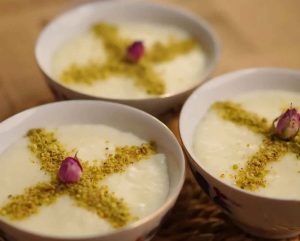
Like many traditional Persian dishes, the exact origins of Shir Berenj are difficult to trace. Rice has been cultivated in northern Iran for centuries, particularly in the lush provinces of Gilan and Mazandaran, where the climate is ideal for growing high-quality rice. Milk, another staple ingredient in rural households, naturally found its way into many simple, nourishing recipes.
Over time, these two everyday ingredients were combined to create a comforting pudding that was both filling and affordable. As Persian cuisine evolved, cooks began adding rose water, a fragrant ingredient deeply rooted in Iranian culinary traditions. Produced from Damask roses, rose water has been used in Persian desserts for hundreds of years, giving Shir Berenj its distinctive floral aroma.
Today, the dessert remains a favorite across Iran. While every family has its own version, the heart of the recipe has changed very little over generations.
Is Shir Berenj the Same as Rice Pudding?
Not exactly.
Shir Berenj belongs to the large family of rice puddings enjoyed around the world, but it has its own personality.
Many Western rice pudding recipes rely heavily on vanilla, cinnamon, cream, raisins, or eggs. Persian rice pudding, on the other hand, is known for its delicate flavors. Rose water is almost always included, and cardamom is often added for extra fragrance. The result is lighter, more aromatic, and less sweet than many European versions.
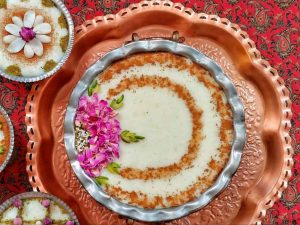
Here’s a quick comparison:
| Shir Berenj | Traditional Rice Pudding |
| Flavored with rose water | Usually flavored with vanilla |
| Often includes cardamom | May include cinnamon or nutmeg |
| Light floral aroma | Rich dairy flavor |
| Usually served plain with simple toppings | Often mixed with raisins or cream |
| Persian origin | Found in many countries |
If you’ve only tasted classic rice pudding before, Shir Berenj offers a completely different experience.
Delicious Topping Ideas
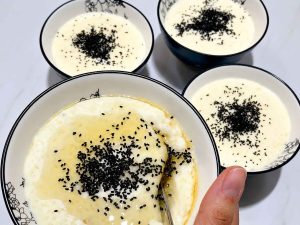
One of the best things about Shir Berenj is how easily it can be customized. The pudding itself is mild and creamy, making it the perfect base for a variety of toppings.
Some of the most popular options include:
Ground Cinnamon
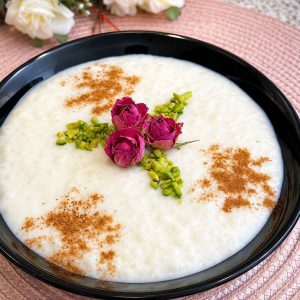
A light dusting of cinnamon adds warmth and color without overpowering the delicate flavor of the rose water.
Chopped Pistachios
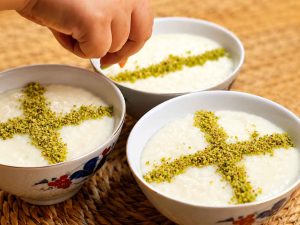
Pistachios are widely used in Persian desserts and add a pleasant crunch as well as a beautiful green color.
Sliced Almonds
Lightly toasted almonds create a nutty contrast to the creamy pudding.
Dried Rose Petals
Edible dried rose petals make the dessert look elegant and enhance its floral aroma.
Honey
If you prefer natural sweetness, drizzle a little honey over the top just before serving.
Date Syrup
In some households, date syrup replaces refined sugar entirely, giving the pudding a deeper caramel-like flavor.
Variations of Shir Berenj
Every family has its own recipe, and that’s part of the charm of Persian cooking.
Vegan Shir Berenj
Replace dairy milk with almond milk, oat milk, or coconut milk for a completely plant-based version.
Saffron Shir Berenj
Add a few tablespoons of brewed saffron during the final minutes of cooking for a luxurious golden color and unmistakable Persian flavor.
Less Sweet Version
Reduce the sugar and let the natural sweetness of the milk shine through.
Rich Dessert Version
Stir in a small amount of heavy cream during the last few minutes for an extra creamy consistency.
Festive Version
Top with pistachios, almonds, dried rose petals, and a few strands of saffron for special occasions.
Common Mistakes to Avoid
Although Shir Berenj is easy to prepare, these common mistakes can affect the final result.
Cooking Over High Heat
High heat causes the milk to scorch and may leave the pudding with a burnt flavor.
Not Stirring Enough
Rice naturally settles at the bottom of the pot. Stirring occasionally prevents sticking.
Adding Too Much Rose Water
Rose water is powerful. Using too much can make the dessert taste like perfume instead of a delicate floral pudding.
Serving Immediately
Freshly cooked Shir Berenj is thinner than its final consistency. Let it rest for 15-20 minutes before serving, or chill it for a thicker texture.
Overcooking
Cooking for too long after the pudding has thickened can make it overly dense. Remove it from the heat while it’s still slightly loose it will continue to set as it cools.
How to Store Shir Berenj
One reason many families prepare a large batch is that it stores well.
- Refrigerate in an airtight container for up to 4 days.
- Let the pudding cool completely before placing it in the refrigerator.
- Cover the surface with plastic wrap or a lid to prevent a skin from forming.
As it chills, the pudding naturally becomes thicker. If needed, stir in a splash of milk before serving to restore its creamy texture.
Can You Freeze It?
Yes, although the texture may change slightly after thawing. Freeze Shir Berenj in individual portions for up to 2 months. Thaw overnight in the refrigerator, then gently reheat with a little milk while stirring to bring back its smooth consistency.
Is Shir Berenj Healthy?
Shir Berenj is made from simple, wholesome ingredients, making it a satisfying dessert when enjoyed in moderation. Rice provides carbohydrates for energy, while milk contributes protein and calcium. Depending on the amount of sugar used, it can also be adapted into a lighter version by reducing the sweetness or using lower-fat milk.
Compared with many rich desserts containing butter, cream, or pastry, Shir Berenj is relatively simple and naturally comforting without feeling overly heavy.
What to Serve with Shir Berenj
Shir Berenj is delicious on its own, but a few simple additions can make it even more special.
- Fresh Fruit: Fresh berries, sliced strawberries, figs, pomegranate seeds, or orange segments add natural sweetness and a refreshing contrast to the creamy pudding.
- Nuts: Chopped pistachios, almonds, or walnuts provide texture and a subtle nutty flavor that pairs beautifully with rose water.
- Persian Tea: A cup of freshly brewed Persian black tea is perhaps the most traditional pairing. The tea balances the sweetness of the dessert without overpowering its delicate aroma.
- Honey or Date Syrup: A light drizzle of honey or date syrup adds richness without making the dessert overly sweet.
Frequently Asked Questions
What does Shir Berenj mean?
“Shir” means milk, and “Berenj” means rice in Persian. Together, the name simply translates to milk and rice.
Is Shir Berenj served hot or cold?
Both. Many people enjoy it warm straight from the pot, while others prefer it chilled after a few hours in the refrigerator. The texture becomes thicker as it cools.
Can I use long-grain rice?
You can, but short-grain rice produces a creamier texture because it releases more starch during cooking. Arborio rice is another excellent alternative.
Can I make it without sugar?
Yes. You can reduce the sugar or replace it with honey, maple syrup, or date syrup according to your taste.
Why is my rice pudding too thick?
Rice continues absorbing liquid as it cools. Simply stir in a little warm milk before serving until it reaches your preferred consistency.
Can I make Shir Berenj ahead of time?
Absolutely. It’s actually one of the best make-ahead desserts because the flavors continue to develop overnight.
Is Shir Berenj gluten-free?
Yes. Rice, milk, sugar, and rose water are naturally gluten-free. Always check packaged ingredients if you have celiac disease or severe gluten sensitivity.
Can children eat Shir Berenj?
Yes. It is a mild, comforting dessert enjoyed by people of all ages. If serving it to young children, you may want to reduce the amount of sugar.
What is the difference between Shir Berenj and Indian Kheer?
Although both are rice puddings, they have distinct flavors and traditions.
Kheer often includes spices such as saffron and cardamom, along with nuts and sometimes condensed milk. Shir Berenj is generally lighter, less sweet, and is known for its signature rose water aroma.
Can I freeze leftovers?
Yes. Freeze individual portions in airtight containers for up to two months. Thaw overnight in the refrigerator and gently reheat with a splash of milk.
Expert Tips for the Best Shir Berenj
Traditional Persian home cooks often rely on a few simple techniques to make exceptional Shir Berenj.
- Use whole milk for the creamiest texture.
- Simmer gently rather than boiling.
- Stir regularly to prevent sticking.
- Add rose water only during the final few minutes of cooking.
- Let the pudding rest before serving so it naturally thickens.
- Garnish just before serving to keep the nuts crisp and fresh.
- Taste before adding extra sugar, as rose water enhances the perception of sweetness.
Sometimes the simplest recipes benefit the most from patience. Slow cooking allows the rice to soften completely and creates the silky consistency that makes Shir Berenj so comforting.
Conclusion:
Shir Berenj is more than just a rice pudding it’s a dessert that reflects the warmth and hospitality of Persian home cooking. Made with everyday ingredients yet elevated by the delicate fragrance of rose water, it has remained a cherished recipe for generations.
Whether you’re exploring Persian cuisine for the first time or recreating a family favorite, this creamy dessert is both approachable and rewarding. Serve it warm on a cozy evening, chilled on a summer afternoon, or dressed with pistachios and dried rose petals for a special occasion. Once you try homemade Shir Berenj, you’ll understand why this simple combination of milk and rice continues to hold a special place in Persian kitchens around the world.
If you love Shir Berenj, you’ll also enjoy other classic Persian desserts like Sholeh Zard, Zoolbia, Muhallebi, Fereni Recipe, and Bastani Sonnati.
