
Persian Omelette (Iranian Tomato and Egg Recipe)
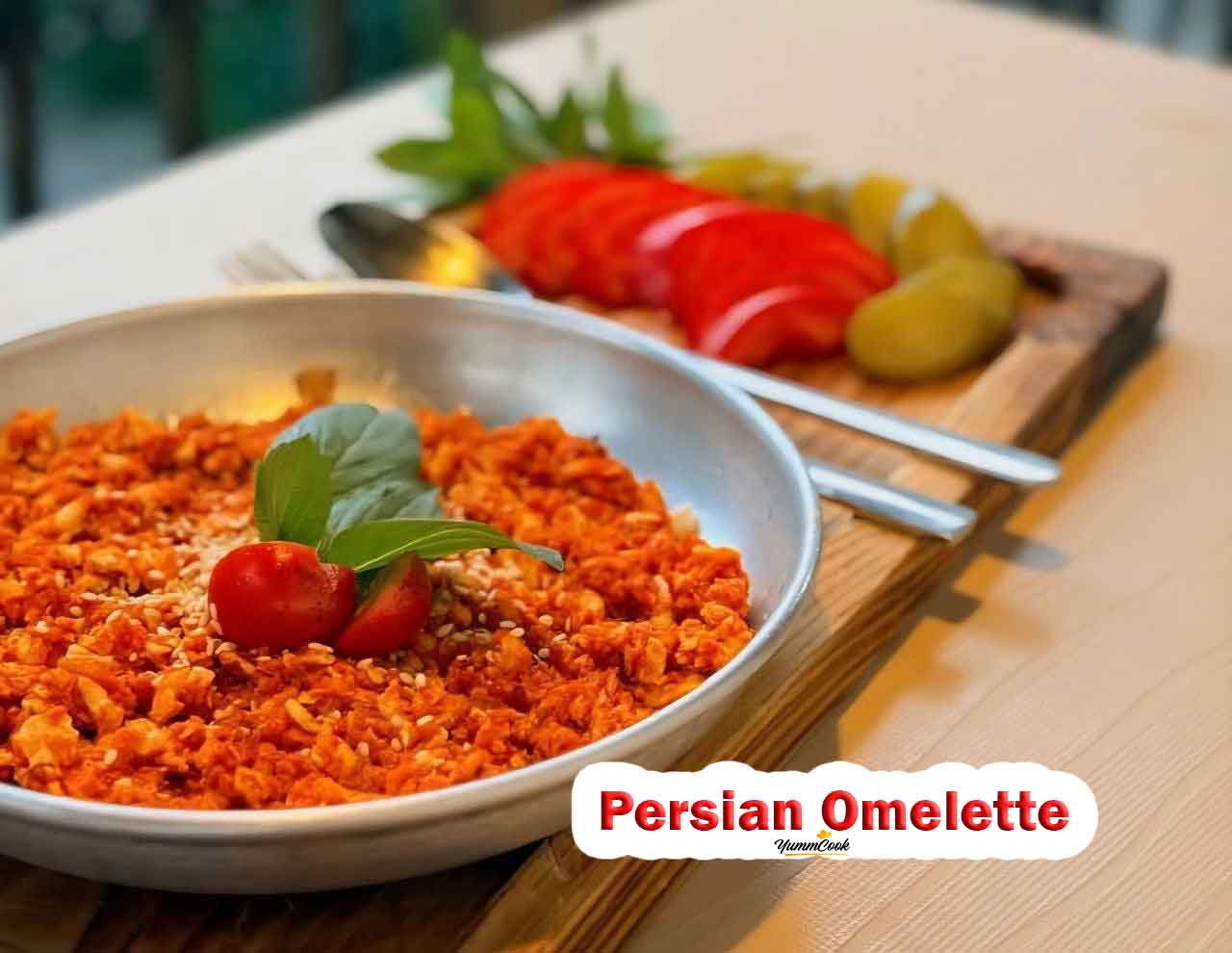
Few breakfasts are as simple, comforting, and flavorful as a traditional Persian Omelette. Known in Iran as Omelet Gojeh Farangi, this classic dish is made with ripe tomatoes, eggs, butter or oil, and a few simple seasonings. Unlike a French omelette, where the eggs are folded around fillings, a Persian omelette gently cooks eggs in a rich tomato base, creating a hearty meal that’s perfect for breakfast, brunch, or even a quick dinner.
One of the reasons this recipe has remained a favorite in Iranian homes for generations is its simplicity. With only a handful of everyday ingredients, you can prepare a delicious meal in less than 30 minutes. Serve it with warm Persian flatbread, fresh herbs, and a cup of hot tea for an authentic Persian breakfast experience.

What Is a Persian Omelette?
Persian Omelette is a traditional Iranian breakfast dish made by cooking fresh tomatoes until they become thick and flavorful before adding eggs directly into the pan. The eggs are gently stirred or left partially whole, depending on personal preference, creating a rich and satisfying meal.
Unlike Western omelettes that often include cheese, vegetables, or meat fillings, the classic Persian version focuses on the natural sweetness of ripe tomatoes combined with creamy eggs. Many families also add turmeric for color and flavor, while some include green peppers or onions for extra depth.
Although it’s commonly served for breakfast, Persian Omelette is enjoyed throughout the day because it’s quick, affordable, and incredibly filling.
Why You’ll Love This Persian Omelette
There are plenty of reasons this traditional recipe has become a staple in Iranian kitchens.
• Ready in about 20 minutes
• Made with simple pantry ingredients
• Naturally gluten-free
• Rich in protein
• Perfect for breakfast, brunch, or a light dinner
• Budget-friendly and easy to prepare
• Full of fresh tomato flavor
• Easily customizable with herbs and spices
Once you try this homemade Persian omelette, it’s likely to become one of your favorite quick meals.

Ingredients for Persian Omelette
This classic recipe uses just a few fresh ingredients that come together beautifully.
Tomatoes: Fresh ripe tomatoes are the heart of this dish. Their natural sweetness creates the rich sauce that makes Tomato and Egg Recipe unique.
Eggs: Large eggs provide the creamy texture and protein that turn the tomato mixture into a satisfying meal.
Onion: A finely chopped onion adds sweetness and depth of flavor as it cooks.
Butter or Oil: Butter gives the omelette a richer taste, while vegetable oil or olive oil works well for a lighter version.
Turmeric: Turmeric is commonly used in Persian cooking and gives the dish its warm color and subtle earthy flavor.
Salt and Black Pepper: Simple seasonings allow the fresh tomatoes to shine.

Ingredients for Persian Omelette
| Ingredient | Amount |
| Large tomatoes, grated or finely chopped | 4 medium |
| Large eggs | 4 |
| Onion, finely chopped | 1 medium |
| Butter or vegetable oil | 2 tablespoons |
| Ground turmeric | ½ teaspoon |
| Salt | 1 teaspoon (or to taste) |
| Black pepper | ½ teaspoon |
How to Make Persian Omelette
Step 1: Cook the Onion
Heat the butter or oil in a large skillet over medium heat. Add the chopped onion and cook for about 5 minutes until soft and lightly golden.
Step 2: Add the Turmeric
Stir in the turmeric and cook for about 30 seconds until fragrant.
Step 3: Cook the Tomatoes
Add the grated or chopped tomatoes along with the salt and black pepper.
Cook over medium-low heat for 10 to 15 minutes, stirring occasionally, until most of the liquid has evaporated and the tomatoes become thick and concentrated.
Step 4: Add the Eggs
Crack the eggs directly over the tomato mixture.
For a traditional style, leave the yolks whole and cover the pan until the eggs are cooked to your liking.
If you prefer a softer texture, gently stir the eggs into the tomatoes until just set.
Step 5: Serve
Remove from the heat and serve immediately with warm Persian bread, fresh herbs, feta cheese, or cucumber slices.
Tips for the Perfect Persian Omelette
• Use ripe, juicy tomatoes for the best flavor.
• Allow the tomatoes to cook until thick before adding the eggs.
• Cook over medium-low heat to prevent burning.
• Don’t overcook the eggs; they should remain soft and creamy.
• Freshly ground black pepper adds the best flavor.
• Serve immediately while hot for the best texture.
Persian Omelette (Iranian Tomato and Egg Recipe)
Ingredients
Method
- Step 1: Heat the butter or olive oil in a large skillet over medium heat. Add the chopped onion and cook for about 5 minutes until soft and lightly golden.
- Step 2: Stir in the ground turmeric and cook for 30 seconds until fragrant.
- Step 3: Add the grated tomatoes, salt, and black pepper. Simmer over medium-low heat for 10-15 minutes, stirring occasionally, until the tomatoes have reduced and most of the liquid has evaporated.
- Step 4: Crack the eggs directly over the tomato mixture. Leave them whole for a traditional presentation, or gently stir them into the tomatoes for a scrambled-style omelette.
- Step 5: Cover the skillet and cook for 3-5 minutes, or until the eggs are cooked to your preferred doneness.
- Step 6: Remove from the heat and serve immediately with warm Persian bread, fresh herbs, feta cheese, or sliced cucumbers.
The History of Persian Omelette
Although eggs have long been part of Persian cuisine, the tomato-based Persian omelette is a relatively modern dish. Tomatoes were introduced to Iran several centuries ago and gradually became a staple ingredient in everyday cooking. Once they were widely available, home cooks began combining them with eggs to create a simple, nourishing meal that was affordable, quick to prepare, and full of flavor.
Over time, the Iranian Omelette became one of the most popular breakfast dishes across Iran. Today, it is commonly enjoyed at home, in traditional cafés, and even as a light lunch or dinner. While every family has its own preferred method, the combination of tomatoes, eggs, and turmeric remains the heart of this classic recipe.

What Makes Persian Omelette Different?
At first glance, Persian Omelette may look similar to tomato and egg dishes from other countries, but its cooking method and flavor make it unique.
Instead of cooking eggs separately, the tomatoes are slowly simmered until they become thick, rich, and naturally sweet. The eggs are then added directly to the tomato mixture, allowing them to absorb all the flavors.
Here’s a quick comparison:
| Persian Omelette | Classic Omelette |
| Cooked in a tomato base | Eggs cooked on their own |
| Flavored with turmeric | Usually seasoned with herbs or cheese |
| Soft and saucy texture | Firm and folded texture |
| Served with Persian bread | Often served with toast |
| Traditional Iranian breakfast | Popular worldwide |
Delicious Variations of Persian Omelette
One of the best things about this recipe is how easy it is to customize.
Onion-Free Persian Omelette
Some families skip the onion entirely, allowing the fresh tomato flavor to stand out even more.
Spicy Persian Omelette
Add chopped green chilies or a pinch of red pepper flakes for extra heat.
Garlic Tomato Omelette
A clove of minced garlic adds another layer of flavor that pairs beautifully with tomatoes.
Herb Omelette
Fresh parsley, cilantro, or dill can be stirred in just before serving for added freshness.
Cheese Omelette
Although not traditional, crumbled feta cheese makes a delicious topping.

What to Serve with Persian Omelette
An Iranian Omelette is often served with a variety of fresh side dishes that turn a simple breakfast into a complete meal.
Persian Flatbread
Warm lavash, sangak, or barbari bread is perfect for dipping into the rich tomato sauce.
Fresh Herbs
Mint, basil, tarragon, parsley, and green onions are traditional accompaniments to many Persian breakfasts.
Feta Chees
Creamy feta provides a salty contrast to the sweet tomatoes
Cucumbers and Tomatoes
Fresh vegetables add crunch and freshness to every bite.
Persian Tea
A glass of freshly brewed Persian black tea completes the meal and balances the richness of the eggs.
Common Mistakes to Avoid
Even a simple recipe like Persian Breakfast can go wrong if a few details are overlooked.
- Using Unripe Tomatoes: Ripe tomatoes provide the natural sweetness and rich flavor that define this dish.
- Adding Eggs Too Early: Allow the tomato mixture to reduce first. If it’s too watery, the eggs won’t cook properly.
- Cooking Over High Heat: Gentle heat helps the tomatoes caramelize without burning.
- Overcooking the Eggs: Soft, creamy eggs create the best texture.
- Skipping the Turmeric: Even a small amount of turmeric gives the omelette its traditional flavor and beautiful golden color.

How to Store Persian Omelette
Persian Omelette is best enjoyed fresh, but leftovers can be stored for later.
- Refrigerate in an airtight container for up to 2 days.
- Reheat gently in a skillet over low heat.
- Add a small splash of water if the tomato mixture becomes too thick.
Can You Freeze It?
Freezing is not recommended. The eggs may become rubbery after thawing, and the fresh tomato texture can change significantly. For the best flavor and texture, prepare the Tomato and Egg Recipe fresh whenever possible.
Is Persian Omelette Healthy?
Yes. Persian Omelette is a nutritious meal made with wholesome ingredients.
Eggs provide high-quality protein, while tomatoes are rich in vitamin C, potassium, and the antioxidant lycopene. Using olive oil instead of butter can make the dish even lighter.
Because it contains plenty of protein and vegetables, Persian Breakfast is a satisfying breakfast that keeps you full for hours.
Frequently Asked Questions
What is a Persian Omelette?
A Persian Omelette is a traditional Iranian breakfast made with fresh tomatoes, eggs, onions, and turmeric. Unlike a classic folded omelette, the eggs are cooked directly in a rich tomato sauce, creating a soft and flavorful dish.
Is Persian Omelette the same as Shakshuka?
No. While both dishes feature eggs and tomatoes, they are different recipes.
Shakshuka typically includes bell peppers, garlic, paprika, cumin, and other spices, while Persian Omelette uses fewer ingredients and relies on the natural sweetness of tomatoes and the earthy flavor of turmeric.
Can I make Persian Omelette without onions?
Yes. Many traditional recipes are made without onions, allowing the fresh tomato flavor to become the star of the dish.
What are the best tomatoes to use?
Fresh, ripe tomatoes are the best choice because they create a naturally sweet and flavorful sauce. Roma tomatoes or vine-ripened tomatoes work especially well.
Can I use canned tomatoes?
Yes. If fresh tomatoes are unavailable, canned diced tomatoes or crushed tomatoes can be used. Simmer them until the excess liquid has evaporated.
Is Persian Omelette spicy?
Traditional Persian Omelette is mildly seasoned and not spicy. If you prefer more heat, you can add fresh chili peppers or red pepper flakes.
Can I add cheese?
Yes. Although it isn’t traditional, feta cheese or shredded mozzarella makes a delicious addition.
Is Persian Omelette healthy?
Yes. Eggs provide high-quality protein, while tomatoes are rich in vitamins and antioxidants. It’s a wholesome and satisfying meal, especially when served with fresh vegetables and herbs.
Can I prepare it ahead of time?
Persian Omelette is best enjoyed immediately after cooking. However, the tomato mixture can be prepared a day in advance and refrigerated. Simply reheat it and add the eggs just before serving.
What bread is served with Persian Omelette?
Traditional Persian breads such as Sangak, Barbari, Lavash, or Taftoon are the most popular choices. Crusty artisan bread also pairs well with the rich tomato sauce.
Expert Tips
For the most authentic flavor, always use fresh, ripe tomatoes instead of canned ones whenever possible. Allow the tomatoes to cook until most of their moisture has evaporated before adding the eggs. This creates a richer, more concentrated sauce and prevents the omelette from becoming watery.
Use medium-low heat throughout the cooking process. Gentle cooking keeps the eggs soft and creamy while allowing the tomatoes to develop their natural sweetness.
If you’re serving Persian Omelette as part of a traditional Iranian breakfast, pair it with warm Persian bread, fresh herbs, feta cheese, cucumbers, and a glass of hot Persian tea.

Conclusion:
Persian Omelette is a perfect example of how simple ingredients can create an unforgettable meal. With ripe tomatoes, eggs, onions, and a touch of turmeric, this traditional Iranian recipe delivers comforting flavors that have been enjoyed for generations.
Whether you’re making a quick weekday breakfast, a leisurely weekend brunch, or even a light dinner, this easy recipe comes together in less than 30 minutes and is always satisfying. Serve it with warm bread and fresh herbs for an authentic Persian breakfast you’ll want to make again and again.
If you enjoyed this Persian Omelette, be sure to explore more traditional Persian recipes like Persian Halim, Gheysava, and Shir Berenj. These classic dishes are popular breakfast and comfort foods that showcase the rich flavors of Iranian cuisine.
