Easy Baghlava Recipe: Persian Baklava at Home
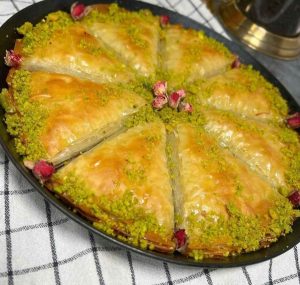
If you have ever tasted a good piece of Baghlava, you probably remember it. That delicate crunch of phyllo dough, the buttery aroma, the richness of pistachios and walnuts, and that subtle fragrance of rose water and cardamom all come together in one small piece of dessert.
For me, Layered Pastry is one of those recipes that feels much more special when it is homemade. I still remember the first time I made it. I was more worried about the thin phyllo sheets than anything else. They looked so fragile that I expected them to tear every time I touched them. In reality, a few broken sheets did not matter at all. Once everything was layered, baked, and covered with syrup, the result was wonderfully crisp, fragrant, and golden.
In this Baghlava recipe, I’ll show you how to make traditional Persian-style Layered Pastry at home, including the ingredients, nut filling, rose water syrup, layering technique, baking tips, and the small details that can make the difference between soggy baklava and beautifully crisp Layered Pastry.

What Is Baghlava?
Baghlava is a traditional layered pastry made with thin phyllo dough, butter, nuts, and sweet syrup. It is closely related to the dessert commonly known around the world as Nut Pastry, although the ingredients, flavors, shapes, and preparation methods vary from one region to another.
Persian Baghlava is especially known for its fragrant combination of ingredients such as pistachios, walnuts, cardamom, and rose water. Unlike some versions of baklava that rely heavily on sweetness, Persian-style baklava can have a more delicate and aromatic flavor. The nuts and spices are just as important as the syrup. And that is exactly what I love about it. A good Baghlava should taste like more than sugar.

Baghlava Ingredients
Here are the simple ingredients you need to make delicious homemade Baghlava.
For the Layered Pastry
| Ingredient | Amount |
| Phyllo dough | 1 package |
| Unsalted butter, melted | 1 cup |
| Finely ground pistachios | 1 cup |
| Finely ground walnuts | 1 cup |
| Finely ground almonds | ½ cup |
| Granulated sugar | ½ cup |
| Ground cardamom | 1 teaspoon |
| Rose water | 1 tablespoon |
For the Syrup
| Ingredient | Amount |
| Granulated sugar | 1½ cups |
| Water | 1 cup |
| Lemon juice | 1 tablespoon |
| Rose water | 1 tablespoon |
| Ground cardamom (optional) | A small amount |
For Garnishing
| Ingredient | Amount |
| Finely chopped pistachios | As needed |
| Crushed walnuts | As needed |
| Ground cardamom (optional) | As needed |
How to Make Baghlava Step by Step
Step 1: Prepare the Nut Filling
- Start by combining the ground pistachios, walnuts, and almonds in a bowl.
- Add the sugar and ground cardamom and mix everything thoroughly.
- Finally, add the rose water.
- You want the mixture to remain relatively dry and crumbly. Don’t turn it into a paste.
- The combination of pistachio, walnut, and cardamom is one of my favorite parts of this recipe. The aroma is already noticeable before the Layered Pastry even goes into the oven.
Step 2: Prepare the Rose Water Syrup
- Add the sugar and water to a saucepan.
- Bring the mixture to a gentle boil, stirring until the sugar dissolves.
- Reduce the heat and simmer for several minutes.
- Add the lemon juice and continue cooking briefly.
- Remove the syrup from the heat and stir in the rose water.
- Let the syrup cool while you prepare the pastry.
- The syrup should be sweet and fluid rather than extremely thick.
The lemon juice is important because it helps balance the sweetness. Without it, the syrup can taste overwhelmingly sugary.
Step 3: Prepare the Phyllo Dough
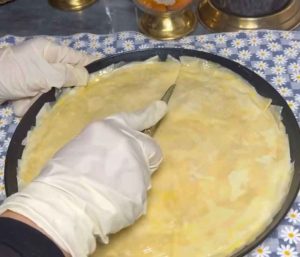
- Carefully unfold the phyllo sheets.
- Cover the unused sheets with a clean, slightly damp kitchen towel.
- This is a small step, but please don’t skip it.
- Phyllo dries surprisingly quickly. Once it becomes dry, it cracks and breaks much more easily.
Don’t worry if one sheet tears, though. You’re working with multiple layers, so a small tear is rarely noticeable in the finished Layered Pastry.
Step 4: Build the First Layers
- Brush your baking dish lightly with melted butter.
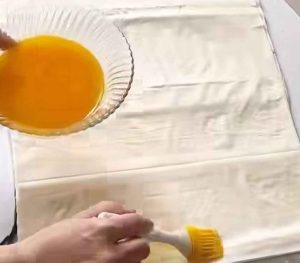
- Place one sheet of phyllo in the dish and brush it gently with butter.
- Repeat with several more sheets.
- The key is to brush the sheets evenly without soaking them.
- Too little butter can leave the pastry dry.
- Too much can make the finished Baghlava greasy.
Step 5: Add the Nut Filling
- Spread a thin, even layer of the nut mixture over the phyllo.
- You don’t need an extremely thick layer.
- The filling should complement the pastry rather than overpower it.
- Continue adding phyllo sheets, butter, and nut filling until you have used the desired amount.
- Finish with several layers of phyllo on top.
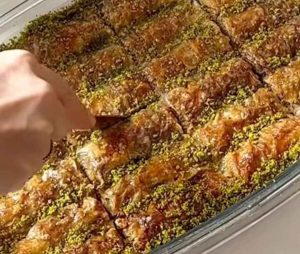
Step 6: Cut the Baghlava Before Baking
This is one of the most important tips in this homemade Baghlava recipe. Use a sharp knife to cut the assembled pastry before putting it in the oven.
You can cut it into:
- Diamonds
- Squares
- Rectangles
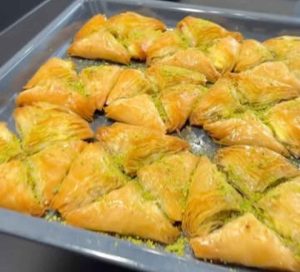
- Small triangles
The diamond shape is especially traditional and makes the finished dessert look beautiful.
Don’t wait until after baking.
Once the pastry becomes crisp and the syrup is absorbed, cutting it becomes much more difficult.
Step 7: Bake the baklava
- Preheat your oven to 350°F (175°C).
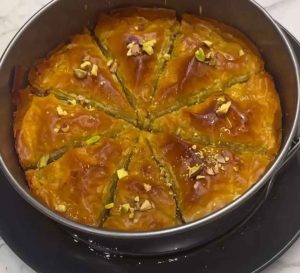
- Bake the Baghlava until the top is deeply golden and crisp, usually around 40-50 minutes, depending on your oven and the thickness of the pastry.
- Don’t rely only on the timer.
- Look at the color.
- Pale baklawa usually means the pastry has not developed enough of that delicious buttery, toasted flavor.
- When the top is golden brown and the layers look crisp, it’s ready for the syrup.
- And at this point, your kitchen should smell absolutely incredible.
Step 8: Add the Syrup
- Remove the hot baklava from the oven.
- Slowly pour the prepared syrup over the pastry, making sure it reaches the cuts and edges.
- You should hear a gentle sizzling sound as the syrup meets the hot pastry.
- Don’t pour everything into one spot.
- Distribute it gradually so the syrup can spread through the layers.
- This step is where the dessert really becomes Layered Pastry.
Step 9: Let the Baghlava Rest
- This is probably the hardest step because you’ll want to taste it immediately.
- Don’t.
- Allow the Nut Pastry to rest for several hours so the syrup can properly absorb and the flavors can settle.
- I actually think Layered Pastry tastes even better after resting.
- The pastry remains pleasantly crisp around the edges while the inside becomes rich and fragrant.

Easy Persian Baghlava Recipe
Ingredients
Method
- Prepare the nut filling: Combine the ground pistachios, walnuts, almonds, sugar, and cardamom. Add the rose water and mix until combined. Keep the mixture crumbly rather than turning it into a paste.
- Make the syrup: Combine the sugar and water in a saucepan. Bring to a gentle boil and stir until the sugar dissolves. Reduce the heat and simmer for several minutes. Add the lemon juice, then remove from the heat and stir in the rose water. Set aside to cool.
- Prepare the phyllo: Carefully unfold the phyllo sheets and cover the unused sheets with a clean, slightly damp kitchen towel to prevent them from drying out.
- Build the first layers: Lightly butter a baking dish. Place a sheet of phyllo in the dish and brush it with melted butter. Repeat with several sheets.
- Add the filling: Spread a thin, even layer of the nut mixture over the phyllo. Continue layering phyllo, butter, and nut filling until the ingredients are used, finishing with several sheets of phyllo.
- Cut the Baghlava: Using a sharp knife, cut the assembled pastry into diamonds, squares, or rectangles before baking.
- Bake: Preheat the oven to 350°F (175°C). Bake for 40–50 minutes, or until the Baghlava is deeply golden and crisp.
- Add the syrup: Remove the hot Baghlava from the oven and slowly pour the prepared syrup evenly over the pastry, making sure it reaches the cuts and edges.
- Rest: Allow the Baghlava to rest for several hours so the syrup can absorb and the flavors can develop.
- Garnish and serve: Sprinkle with chopped pistachios, crushed walnuts, or a little cardamom before serving.
Persian Baghlava vs. Baklava
You may notice that some recipes use the word Baghlava, while others use Nut Pastry. The two names are often used for closely related layered pastries made with phyllo dough, nuts, butter, and syrup. However, regional recipes can be quite different.
A traditional Persian baklava may include:
- Pistachios
- Walnuts
- Almonds
- Cardamom
- Rose water
- Butter
- Sugar syrup
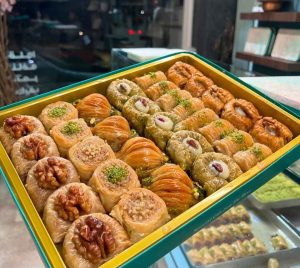
Turkish, Greek, Middle Eastern, and Balkan versions can use different nuts, spices, syrups, shapes, and proportions. So when searching for a Baghlava recipe, you may also find recipes listed as Persian baklava or baklava recipes. The important difference is often the regional flavor profile rather than the basic structure of the dessert.

Easy Baklava Recipe
If you’ve never made baklava before, don’t let the number of layers intimidate you.
The process is actually quite straightforward:
- Prepare the nut filling.
- Make the sugar syrup.
- Layer the phyllo dough with melted butter.
- Add the nut mixture.
- Finish with more phyllo layers.
- Cut the pastry.
- Bake until golden and crisp.
- Pour the syrup over the hot Baghlava.
- Let it rest before serving.
The most important thing is not rushing the process.

How to Get Crispy Baghlava
Crispness is one of the biggest challenges when making homemade Layered Pastry.
Here are my most important tips:
Keep the phyllo covered
Dry phyllo tears easily, so cover unused sheets while assembling the dessert.
Don’t use too much butter
Every layer needs butter, but you don’t need to soak the dough.
Bake until properly golden
A pale pastry is unlikely to have the texture you’re looking for.
Don’t drown it in syrup
The goal is absorption, not saturation.
Give it enough resting time
The syrup needs time to move through the layers.
The Best Nuts for Baghlava
There are plenty of choices when it comes to the Baghlava filling.
Pistachios: Pistachios provide a beautiful color and a slightly sweet, rich flavor. They are especially popular in Persian-style baklawa.
Walnuts: Walnuts add a deeper and earthier flavor. They pair beautifully with cardamom.
Almonds: Almonds have a milder flavor and add another layer of texture.
A Combination of Nuts: My favorite approach is a combination of pistachios and walnuts, with a smaller amount of almonds. The result is flavorful without becoming too heavy.
Why Rose Water and Cardamom Matter
If you want your Nut Pastry to have a distinctly Persian character, don’t overlook these two ingredients.
Rose Water: Rose water gives the syrup and pastry a delicate floral fragrance. But use it carefully. Too much rose water can make the dessert taste overly perfumed.
Cardamom: Cardamom brings warmth and complexity. It doesn’t necessarily announce itself with every bite. Instead, it sits quietly in the background and makes the other flavors taste more interesting. That’s one reason I use it whenever I make Persian sweets.

Common Baghlava Mistakes
- Using Dry Phyllo
If your phyllo sheets become brittle before you finish assembling the dessert, the process becomes frustrating. Keep them covered.
- Overloading the Filling
A thick layer of nuts may sound appealing, but too much filling can make the layers difficult to balance.
- Overusing Rose Water
Rose water is powerful. A little is enough.
- Making Extremely Thick Syrup
Very thick syrup may not distribute evenly through the pastry.
- Not Baking Long Enough
The pastry needs enough time to become crisp and golden.
- Serving Immediately
Freshly baked Baghlava smells irresistible, but resting gives the syrup time to distribute and the flavors time to develop.
Can You Make Baklava Ahead of Time?
Absolutely. In fact, Layered Pastry is a wonderful dessert to prepare ahead of a dinner party or celebration. Once prepared, it can be stored in an airtight container at room temperature for several days. This makes it particularly convenient for holidays and gatherings. You don’t have to worry about making dessert at the last minute while everyone else is waiting at the table.

How to Store Homemade Baghlava
Allow your Nut Pastry to cool completely before storing it. Place the pieces in an airtight container and keep them at room temperature for a few days. Avoid sealing the container while the pastry is still warm because trapped moisture can soften the phyllo. If you refrigerate baklawa, the texture may become slightly firmer. Letting it return to room temperature before serving can improve the texture.
Can Baghlava Be Frozen?
Yes, you can freeze Layered Pastry. Place the pieces in an airtight freezer-safe container and separate layers with parchment paper. When you’re ready to eat them, allow the Sweets to thaw gradually. Although a freshly made baklava recipe has the best texture, properly frozen and thawed pieces can still be very enjoyable.
What to Serve With Baghlava
Baklava is rich and sweet, so I prefer serving it with something unsweetened.
Try it with:
- Persian black tea
- Turkish coffee
- Arabic coffee
- Strong brewed tea
- Unsweetened coffee
A small piece of baklava with a cup of hot tea is one of my favorite combinations. The bitterness of the tea balances the sweetness of the syrup beautifully.
Baghlava for Persian Celebrations
Persian sweets have a strong connection with hospitality and celebration, and Baghlava fits naturally into that tradition.
It can be served at family gatherings, holidays, celebrations, parties, and when welcoming guests. There is something special about placing a plate of homemade baklawa next to a pot of tea. People rarely take just one piece. At least, that has been my experience.
More Delicious Persian & Middle Eastern Sweets
If you love traditional sweets, there are plenty of delicious recipes to try alongside Baghlava. From crispy Lokma and syrupy Zoolbia to soft and chewy Coconut Cookies and classic Shirini keshmeshi, these treats offer a wonderful mix of flavors and textures. They are perfect for serving with tea, coffee, or as part of a festive dessert table.

Frequently Asked Questions About Baghlava
What is Baghlava made of?
Baghlava is generally made with phyllo dough, butter, nuts, and sweet syrup. Persian versions may also include cardamom and rose water.
Is Baghlava the same as baklava?
Baghlava and baklava are closely related names for layered nut pastries. Regional recipes can differ considerably in flavor, shape, ingredients, and preparation.
What nuts are traditionally used in Baghlava?
Pistachios, walnuts, and almonds are among the most popular choices.
What makes Persian Baghlava different?
Persian Layered Pastry is often distinguished by its fragrant use of ingredients such as rose water and cardamom, along with nuts such as pistachios and walnuts.
How long should baklava rest after adding syrup?
Allowing it to rest for several hours gives the syrup time to absorb and the flavors time to develop.
Why is my Baghlava soggy?
The most common reasons include using too much syrup, insufficient baking, excessive butter, or storing the pastry while it is still warm.
Can I make Baghlava without rose water?
Yes. Rose water adds a characteristic Persian aroma, but you can leave it out if you don’t enjoy the flavor.
Is homemade Baghlava difficult to make?
It can look complicated because of the many phyllo layers, but the actual process is quite manageable. The most important skills are handling phyllo carefully, controlling the butter, baking the pastry thoroughly, and balancing the syrup.
Final Thoughts on This Baghlava Recipe
There is something wonderfully old-fashioned about making Baghlava. You work slowly with thin sheets of pastry, brush them with butter, prepare the nut filling, make a fragrant syrup, and then wait. It isn’t a dessert that rewards rushing. And perhaps that’s exactly why I enjoy it.
When the Layered Pastry finally comes out of the oven, golden and crisp, and the rose-scented syrup starts soaking into those delicate layers, the kitchen feels different. It smells warm, buttery, nutty, and floral all at once. If you’re making Baghlava for the first time, don’t worry about getting every layer absolutely perfect. Phyllo can tear. The filling can move slightly. Your first batch may not look like the ones in a professional pastry shop.
That’s okay. Focus on the texture, the aroma, and the balance of flavors. Once you taste a homemade Persian Baghlava with crisp phyllo, toasted nuts, cardamom, and just the right amount of rose water syrup, you’ll understand why this little pastry has remained a favorite across generations. And if you have a cup of strong Persian tea beside it, even better.
yummy