
Basbousa Recipe: A Golden, Syrupy Middle Eastern Cake
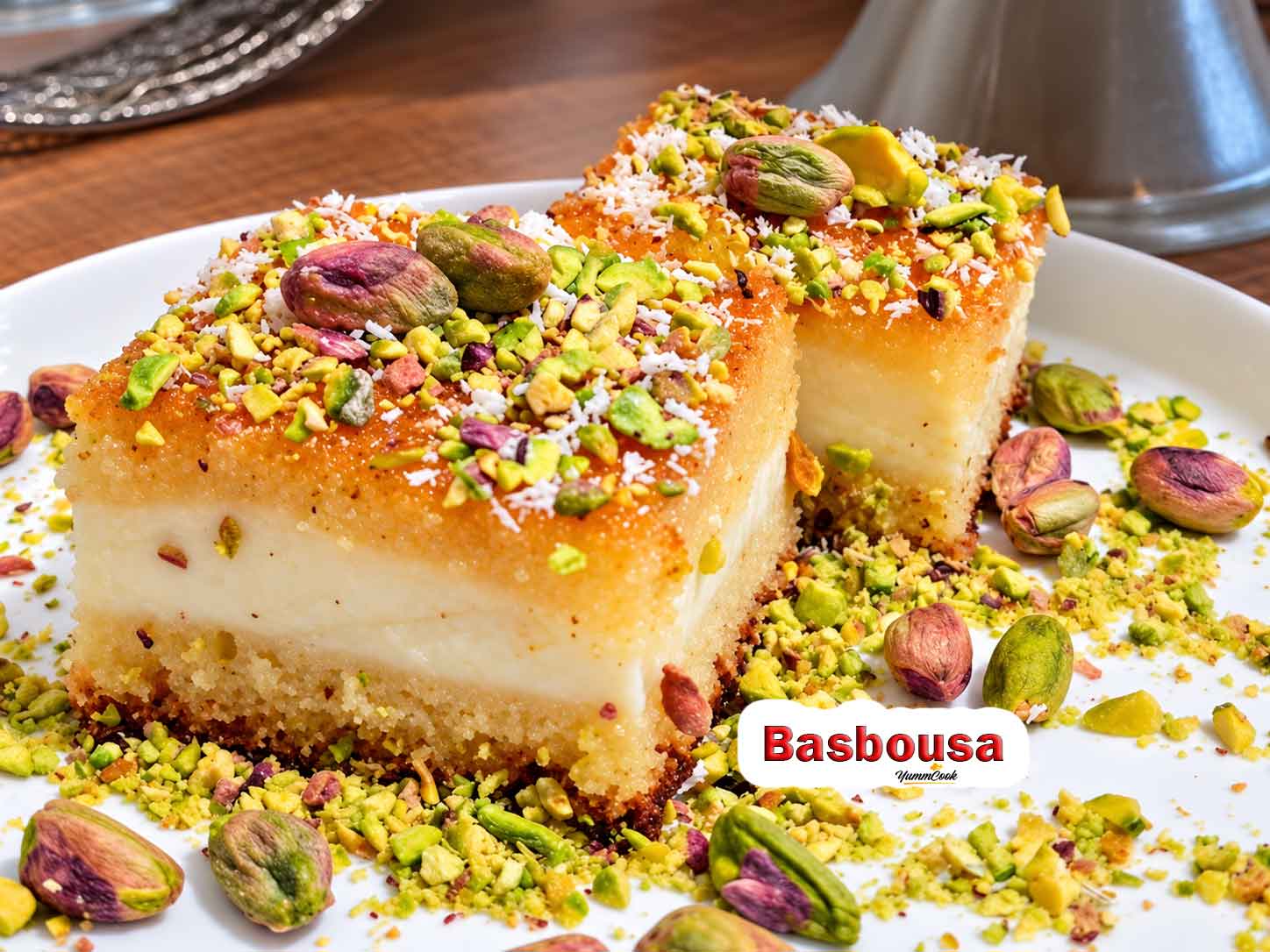
Basbousa is a delicious semolina cake with a golden top, a tender crumb, and a sweet syrup that soaks into every bite. This traditional Middle Eastern dessert is easy to prepare at home with simple ingredients such as semolina, yogurt, butter, and sugar. A few almonds on top give each piece a lovely finishing touch. What makes Basbousa special is its texture. Unlike a regular sponge cake, it has a slightly grainy bite from the semolina and a moist, rich center from the syrup. Serve it with a cup of hot tea or coffee for a comforting afternoon treat.
A Little History Behind Basbousa
Basbousa has a long history in Middle Eastern and North African food culture, particularly in Egypt, where it is a well-known traditional sweet. Similar semolina cakes are enjoyed throughout the region under different names, including Namoura and Hareesa. Their recipes vary from place to place, with differences in sweetness, toppings, and flavorings. Over time, Basbousa became a popular dessert for family gatherings, celebrations, and Ramadan. Its simple ingredients and beautiful golden appearance helped make it a favorite in home kitchens and pastry shops. Today, this classic Egyptian dessert continues to bring people together over a shared love of homemade sweets.
Why You Will Love This Basbousa Recipe
- Simple ingredients: You can make this cake with everyday baking ingredients and no complicated techniques.
- A moist texture: Yogurt helps create a tender cake, while sugar syrup adds moisture and sweetness.
- A beautiful golden top: The baked surface develops a lightly crisp finish that contrasts with the soft center.
- Easy to serve: Cut the cake into squares or diamonds for an attractive presentation.
- Perfect for sharing: Basbousa is a lovely choice for family gatherings, afternoon tea, and special occasions.
Basbousa Ingredients
You only need a few ingredients to make this homemade Basbousa. Coarse semolina gives the cake its characteristic texture, while yogurt adds moisture and a gentle tang. Melted butter brings richness, and the sugar syrup gives each slice its signature sweetness.
Ingredients for the Cake
| Ingredient | Amount |
| Coarse semolina | 2 cups (about 340 g) |
| Plain yogurt | 1 cup (240 g) |
| Granulated sugar | 1/2 cup (100 g) |
| Unsalted butter, melted | 1/2 cup (113 g) |
| Desiccated coconut | 1/2 cup (about 40 g) |
| Baking powder | 1 1/2 teaspoons |
| Vanilla extract | 1 teaspoon |
| Whole almonds | 16, or as needed |
Ingredients for the Sugar Syrup
| Ingredient | Amount |
| Granulated sugar | 1 cup (200 g) |
| Water | 3/4 cup (180 ml) |
| Lemon juice | 1 teaspoon |
| Rose water, optional | 1 teaspoon |
How to Make Basbousa Step by Step
Making Basbousa at home is straightforward. The most important parts are mixing the batter without overworking it, baking until the surface turns golden, and allowing the cake to absorb the syrup properly.
Step 1: Prepare the Oven and Baking Pan
Preheat your oven to 350°F (180°C). Lightly grease a 9-inch square baking pan with butter. You can also use a similar-sized baking dish, but the cake’s thickness and baking time may vary slightly.
Step 2: Combine the Dry Ingredients
In a large bowl, combine the semolina, sugar, desiccated coconut, and baking powder. Stir until everything is evenly distributed. This helps prevent pockets of baking powder or sugar from forming in the finished cake.
Step 3: Add the Butter, Yogurt, and Vanilla
Pour the melted butter into the dry mixture. Add the yogurt and vanilla extract, then stir until the ingredients form a thick, evenly combined batter. Avoid mixing more than necessary, as you want the cake to retain its characteristic semolina texture. Let the mixture rest for about 10 minutes so the semolina can absorb some of the moisture. This small step helps the batter become more uniform before baking.
Step 4: Transfer the Batter to the Pan
Spread the batter evenly in the prepared pan, smoothing the surface with a spatula. Use a knife to mark 16 squares or diamond shapes. Place one almond in the center of each portion, pressing it gently into the surface. Scoring the cake before baking makes it easier to cut neatly later and gives the finished Basbousa its traditional appearance.
Step 5: Bake Until Golden
Place the pan in the preheated oven and bake for approximately 30-40 minutes, or until the top is golden brown and the center is set. Check the cake toward the end of the baking time, as ovens can vary. If the edges brown much faster than the center, keep an eye on the cake to prevent the surface from becoming too dark. The finished cake should look golden and feel firm enough to hold its shape.
Step 6: Prepare the Sugar Syrup
While the cake bakes, combine the sugar and water in a small saucepan. Bring the mixture to a gentle boil, stirring until the sugar dissolves. Add the lemon juice and simmer for about 5-7 minutes. Remove the saucepan from the heat and stir in the rose water, if using. Allow the syrup to cool while the cake finishes baking. A light lemon note balances the sweetness, while rose water adds a delicate floral aroma.
Step 7: Pour the Syrup Over the Cake
Remove the baked Basbousa from the oven and carefully pour the cooled syrup evenly over the hot cake. You may hear a gentle sizzling sound as the syrup touches the warm surface. Pour slowly, allowing the syrup to spread across the scored lines and soak into the cake. If you prefer a less sweet dessert, start with about three-quarters of the syrup and add more as needed.
Step 8: Let It Rest Before Serving
Allow the Basbousa to rest for at least 1-2 hours so the syrup can distribute throughout the cake. Once it has cooled and absorbed the liquid, cut along the marked lines and lift out the pieces carefully. The wait is worthwhile. The semolina becomes pleasantly moist, the almond topping adds a little crunch, and the flavors have time to come together.
Basbousa Recipe
Ingredients
Method
- Preheat the oven to 350°F (180°C) and grease a 9-inch square baking pan.
- Combine the semolina, sugar, desiccated coconut, and baking powder in a large bowl.
- Add the melted butter, yogurt, and vanilla extract. Mix until combined, then let the batter rest for 10 minutes.
- Spread the batter evenly in the prepared pan. Score into 16 squares or diamonds and place an almond on each piece.
- Bake for 30-40 minutes, until the top is golden brown and the center is set.
- Meanwhile, combine the sugar and water in a saucepan. Bring to a gentle boil, add the lemon juice, and simmer for 5-7 minutes. Stir in the optional rose water and let the syrup cool.
- Pour the cooled syrup evenly over the hot cake. Start with about three-quarters of the syrup if you prefer a less sweet dessert.
- Let the cake rest for 1-2 hours before cutting along the scored lines and serving.
My Tips for Soft and Moist Basbousa
The secret to a satisfying Basbousa is balancing the texture of the cake with the amount of syrup. The cake should be moist and tender without becoming soggy or falling apart.
- Choose the right semolina: Coarse semolina gives Basbousa its traditional texture. Very fine semolina can produce a different result.
- Measure carefully: Too much semolina can make the cake dry, while too much liquid can leave it overly soft.
- Avoid overmixing: Stir until the ingredients are combined rather than beating the batter like a sponge cake.
- Watch the baking time: The cake needs enough time to develop a golden surface and set in the middle.
- Use the temperature contrast: Pour cooled syrup over the hot cake to help it absorb the liquid gradually.
- Give it enough resting time: Cutting the cake too soon can make the pieces fragile and prevent the syrup from settling evenly.
How to Serve Basbousa
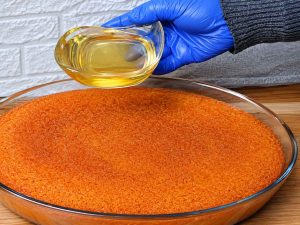
Basbousa tastes wonderful at room temperature, when its texture is soft and the sweetness is well distributed. Arrange the pieces on a serving plate with the almonds facing upward for a simple but attractive presentation. For an afternoon treat, serve it with black tea or Arabic coffee. You can also offer it after a family meal alongside other Middle Eastern sweets. If you enjoy extra fragrance, a small amount of rose water or orange blossom water in the syrup can give the dessert a delicate floral finish.
How to Store Homemade Basbousa
Allow the cake to cool completely before storing it. Keep it in an airtight container in the refrigerator for up to 4-5 days. Before serving, let individual pieces sit at room temperature for a short time so the texture softens. You can also freeze individual portions in a freezer-safe container for up to 2 months. Thaw them in the refrigerator and bring them to room temperature before serving. The texture may change slightly after freezing, but the cake should still be enjoyable.
More Middle Eastern and Turkish Desserts to Try
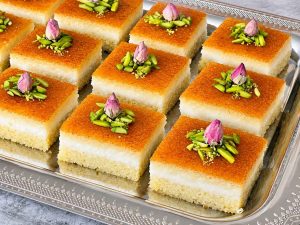
If you enjoy Basbousa, there are many other traditional sweets worth exploring. Khagineh is a delicious Iranian dessert made with eggs and flour, often flavored with syrup or fragrant spices. Sambali is a popular Turkish semolina cake with a sweet, syrup-soaked texture similar to Basbousa. You can also try Gulab Jamun, a soft and sweet dessert served in sugar syrup, or explore desserts made with Soji and irmik, two names commonly used for semolina in South Asian and Turkish cooking. These desserts offer different flavors and textures while sharing the comforting sweetness that makes traditional desserts so special.
Frequently Asked Questions
What Is Basbousa Made Of?
Basbousa is a traditional semolina cake usually made with semolina, sugar, butter or ghee, yogurt or another liquid, and sugar syrup. Coconut and almonds are common additions, although recipes vary by region.
Is Basbousa the Same as Semolina Cake?
Basbousa is a type of semolina cake, but not every semolina cake is Basbousa. Its characteristic features are its Middle Eastern roots, distinctive texture, and sweet syrup topping.
Why Is My Basbousa Dry?
Basbousa may become dry if it is overbaked, contains too much semolina, or does not absorb enough syrup. Measure the ingredients carefully and allow sufficient resting time after adding the syrup.
Can I Make Basbousa Without Coconut?
Yes. You can leave out the coconut if you prefer. The flavor and texture will change slightly, so check the batter’s consistency and avoid adding extra semolina without a clear reason.
Can I Make Basbousa Ahead of Time?
Yes. Basbousa is a convenient make-ahead dessert because it needs time to absorb the syrup. Prepare it a day before serving, store it covered, and bring it to room temperature before enjoying.
Final Thoughts
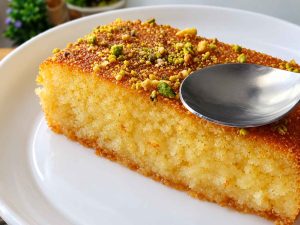
Basbousa is a wonderful example of how simple ingredients can create a memorable dessert. Its golden crust, tender semolina crumb, sweet syrup, and almond topping make every piece inviting. With careful baking and enough time for the syrup to soak in, you can prepare this traditional Middle Eastern dessert in your own kitchen and share it with family and friends. Enjoy it with a warm cup of tea whenever you want something sweet and comforting.
